
Character Reference Sheets
A character reference sheet is the production-standard document that defines a character's visual identity — proportions, angles, colors, expressions, and construction details. Studios, animators, game developers, and illustrators use reference sheets as the single source of truth so every artist (human or AI) works from the same canonical design.
Key takeaways
- Reference sheets are the production standard for a reason. Every animation studio and game studio uses them. They eliminate ambiguity, cut revision cycles, and keep teams aligned. An AI tool that generates a reference sheet makes this studio-grade practice available to solo creators.
- A turnaround is one piece of the sheet, not the whole thing. Orthographic angles get the most attention, but the color palette, expression callouts, scale chart, and construction guides do just as much work in production.
- AI cuts reference sheet production from days to seconds. A hand-drawn five-angle model sheet from a senior character designer takes 3–5 working days. EZ Character generates eight consistent angles in one pass, ready to lay out into a sheet.
- Clarity beats beauty on a reference sheet. Flat, unshaded orthographic views communicate construction better than rendered painterly art. The best reference sheet prioritizes information density over visual impressiveness.
What goes on a character reference sheet?
A production-grade character reference sheet is more than a set of drawings — it is the complete visual specification for a character. Every element serves a specific job in the production pipeline.
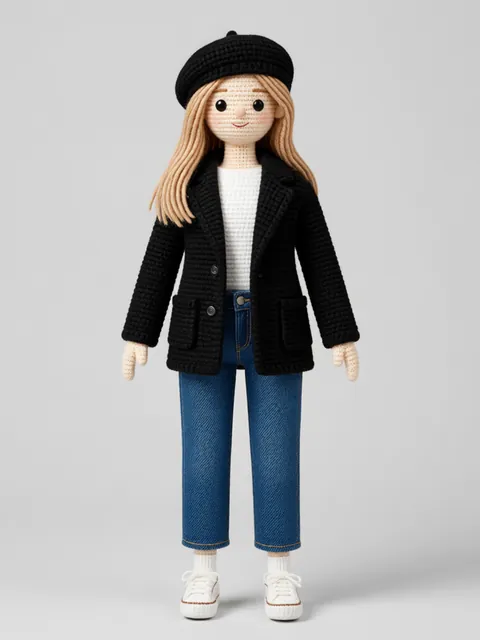
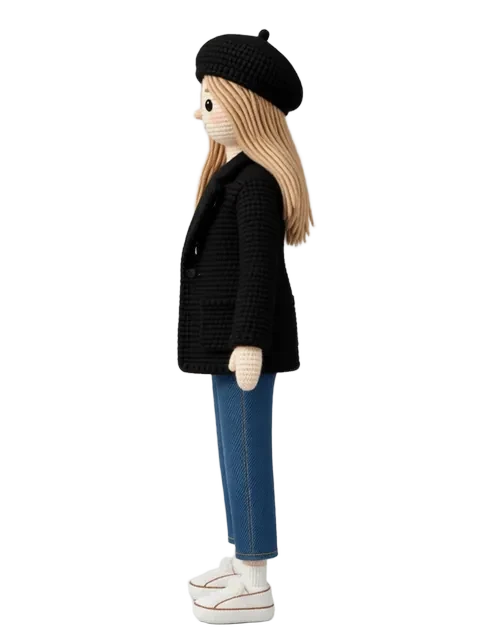
- Orthographic angles. The core of any sheet: front, three-quarter front, profile, three-quarter back, and back views. These are drawn flat (no perspective distortion) so every proportion can be measured directly. A full eight-angle set adds inverse angles for rigging and 3D work.
- Expression sheet. The same face in 5–8 emotional states: neutral, happy, sad, angry, surprised, scared, disgusted, thoughtful. Expression sheets are critical for animation keyframes and comic panel planning. They also test whether the face design is flexible enough to emote clearly.
- Color palette. Swatches with hex codes or paint numbers for every color on the character: skin base, skin shadow, hair base, hair highlight, each costume piece, eye color, accessory colors. In production, the color palette is non-negotiable — lighting artists and colorists match to it exactly.
- Scale chart. A height comparison against a standard reference (usually a 6-foot human figure or another character from the same cast). Scale charts prevent the "every character is the same height" problem in ensemble casts.
- Construction guides. The underlying shapes that build the character: head sphere, torso cylinder, joint placement, center lines. These are for artists who need to draw the character from a novel angle not covered by the orthographic views.
- Props and equipment. Signature items the character carries: weapons, tools, bags, jewelry, instruments. Each prop gets its own mini-sheet with scale relative to the character and attachment points (how the sword sits in the hand, how the bag hangs from the shoulder).
- Callouts. Annotated notes pointing to specific details: "scar runs from left eyebrow to cheekbone," "belt buckle is hexagonal, not round," "ears are slightly pointed — not human, not full elf." Callouts catch the details that drawings alone might miss.
Reference sheets vs turnaround sheets vs model sheets
These three terms are used interchangeably so often that even experienced artists blur them. But they emphasize different things, and knowing the distinction matters when you're briefing an artist or searching for the right tool.
- Turnaround sheet. The narrowest term. A turnaround is specifically the set of orthographic views showing the character rotating in space: front, side, back, three-quarter. It answers one question: what does this character look like from every angle? A turnaround may not include color swatches, expressions, or callouts.
- Model sheet. The production term. A model sheet includes the turnaround plus construction guides, color palette, expression examples, scale reference, and annotation callouts. It is the complete production document that every artist on a team works from. Disney and Pixar model sheets are the gold standard.
- Reference sheet. The broadest term. It can be a full production model sheet or a simpler visual reference — a single posed illustration with callouts, a mood board of the character in different outfits, a turnaround with just the key angles. "Reference sheet" is what most online communities and indie creators say when they mean "model sheet."
In practice: if you're working solo on a webcomic or game jam, a turnaround with color swatches is enough. If you're briefing multiple artists or building a production pipeline, you want the full model sheet. EZ Character generates the turnaround — the hard part — and you add the callouts and color guides to build the full sheet.
How AI changes the reference sheet workflow
The traditional reference sheet workflow is expensive because it's front-loaded: you pay a senior character designer for 3–5 days of work before any scene illustration, animation, or asset production can begin. That bottleneck made reference sheets a studio-only practice for decades. Solo creators skipped them — and paid the price in consistency drift later.
AI inverts the economics. Generating the turnaround — the most time-consuming component — drops from days of skilled labor to seconds of compute. The workflow shifts from "pay an artist to draw every angle" to "generate the angles, curate the best output, and add the annotations yourself."
The downstream impact is larger than the time savings. When reference sheets become cheap, they become default. A children's book illustrator who used to eyeball character consistency across 24 spreads can now generate a reference sheet from spread 1 and pin it next to their monitor. An indie game dev who used to handwave character design can generate sheets for every NPC and hand them to contractors. The bottleneck dissolves, and the production standard becomes accessible.
Hand-drawn vs AI-generated reference sheets
| Factor | Hand-drawn reference sheet | AI-generated reference sheet |
|---|---|---|
| Time to produce | 3–5 working days | Seconds to generate; minutes to hours to curate and annotate |
| Cost | $1,500–$5,000+ (senior character designer rate) | Free tier to ~$20/month (EZ Character Pro) |
| Iteration speed | Days per revision cycle | Seconds — generate multiple candidates, pick the best |
| Style flexibility | Limited to the artist's style range | Any style the model supports — anime, pixel art, realista, cartoon, stylized |
| Quality ceiling | Highest — senior artists produce museum-grade sheets | High — production-grade for most indie and commercial work |
| Construction precision | Exact — construction lines measured and deliberate | Good — consistent across angles but may need manual correction for rigging |
| Best for | Union animation, AAA games, feature film | Indie games, webcomics, children's books, YouTube animation, pre-production concept |
Anatomy of a great character reference sheet
A great reference sheet communicates the character's entire visual identity at a glance. Every element earns its space.
- Clean, undistorted orthographic views. No perspective foreshortening. The front view is dead-on. The profile is exactly 90 degrees. The back matches the front in proportion. If an animator can't measure from the sheet, the sheet failed.
- Consistent proportions across all views. The character's head-to-body ratio, limb lengths, hand size, and foot placement must match across every angle. This is the hardest technical requirement and the one where AI tools most need human curation.
- Expression range that tests the design. A character that looks great neutral but unrecognizable when smiling has a design problem. The expression sheet exists as much to stress-test the design as to guide animators.
- Callouts for the details that drawings miss. "Hair parts on the left." "Right eye is slightly larger than left." "Three earrings on the left ear, none on the right." These details are invisible at a glance but destroy consistency when missed.
- Flat lighting with no cast shadows. Shadows obscure form. A reference sheet is lit evenly from the front, so every contour is visible. Save the dramatic lighting for the portfolio piece.
- One character per sheet. Don't crowd multiple characters onto one sheet. Each character gets their own document. Interaction sheets (two characters together, showing relative scale and physical relationship) are a separate deliverable.
Frequently asked questions
What's the difference between a reference sheet, model sheet, and turnaround?
How many angles does a reference sheet need?
Do I need a reference sheet for a one-off illustration?
Can an AI-generated reference sheet substitute for hand-drawn model sheets in animation?
What art style works best on a reference sheet?
How do animators and game devs use these sheets in practice?
How long does a professional reference sheet take to create?
What file format should a reference sheet be?
Generate your first character reference sheet
Upload one image. Get 8 consistent angles in seconds. Lay them out into a production-ready reference sheet with color swatches and callouts.
Try Turnaround Sheet freeFree tier: 40 credits every month. No credit card required.