
80+ AI Character Pose Prompts: Free Templates (2026)
These 80+ tested pose prompt keywords are organized by body position — standing, sitting, kneeling, crouching, lying, and leaning. Each keyword includes a short explanation of when to use it so you can copy-paste the right pose into your prompt without trial and error.
Key takeaways
- Pose prompts tell the AI exactly how to position your character. Without them, every character defaults to stiff, arms-at-sides, facing camera.
- Layer specificity: character → base pose → arm/hand modifier → setting. Each layer reduces what the AI has to guess. The more you specify, the less it drifts.
- Stack compatible keywords. "Sitting cross-legged, leaning forward, hands clasped" layers three modifiers that reinforce each other. "Sitting cross-legged while running" confuses the model.
- Lock your character reference first, then pose from it. Generate a multi-angle reference sheet once. Use it as the input for every new pose. Same face, different body language.
How to Layer Pose Keywords for Better Results
A single pose keyword is better than nothing. But the best AI character poses come from layering — stacking a base position with an arm/hand modifier and an emotional or contextual detail. Each layer constrains the generator further, producing more precise and personality-rich output.
girl standing Generic, stiff, arms at sidesgirl standing with hands on hips Confident, personality emerginggirl standing with hands on hips, slight head tilt, curious expression Full personality, production-readyThree layers. The first gives position. The second gives attitude. The third gives life. This layering pattern works across every pose category below — start with the base position, add an arm/hand modifier from that section, then add expression or context.
How AI Tools Handle Character Posing — Compared
| Tool | Posing method | Consistency | Best for |
|---|---|---|---|
| EZ Character | Multi-angle generation + Repose single-angle tool + 3D Camera Angle orbit control | High — locked identity across poses | Production reference sheets, multi-pose character bibles, consistent pose libraries |
| Midjourney | Prompt-only — describe pose in text, no visual anchoring between generations | Medium — --cref helps identity but pose-to-pose drift accumulates | Single-hero images, aesthetic exploration, one-off posed illustrations |
| Stable Diffusion | Prompt + ControlNet (OpenPose) for skeletal pose guidance, IP-Adapter for identity | Medium–High (with setup) — requires ComfyUI or A1111 pipeline construction | Technical users with custom SD pipelines, LoRA-trained recurring characters |
| DALL·E 3 / GPT-Image | Prompt-only — conversational refinement through ChatGPT but no visual anchoring | Low–Medium — each generation is independent, no reference-image conditioning | Concept exploration, conversational prompt iteration, quick pose experiments |
| Leonardo AI | Prompt + Pose-to-Image (motion-based), fine-tuning datasets for character models | Medium — motion input helps pose accuracy but identity varies across fine-tuned snapshots | Teams with dedicated character model training, game asset production pipelines |
All five tools can generate posed characters. The difference is whether the same character stays consistent across multiple poses. EZ Character generates the locked multi-angle reference first, then re-poses from it — so identity holds across every body position. Other tools generate each pose independently, accumulating drift with every new prompt. Full comparison of AI tools for character turnarounds →
Standing Pose Prompts
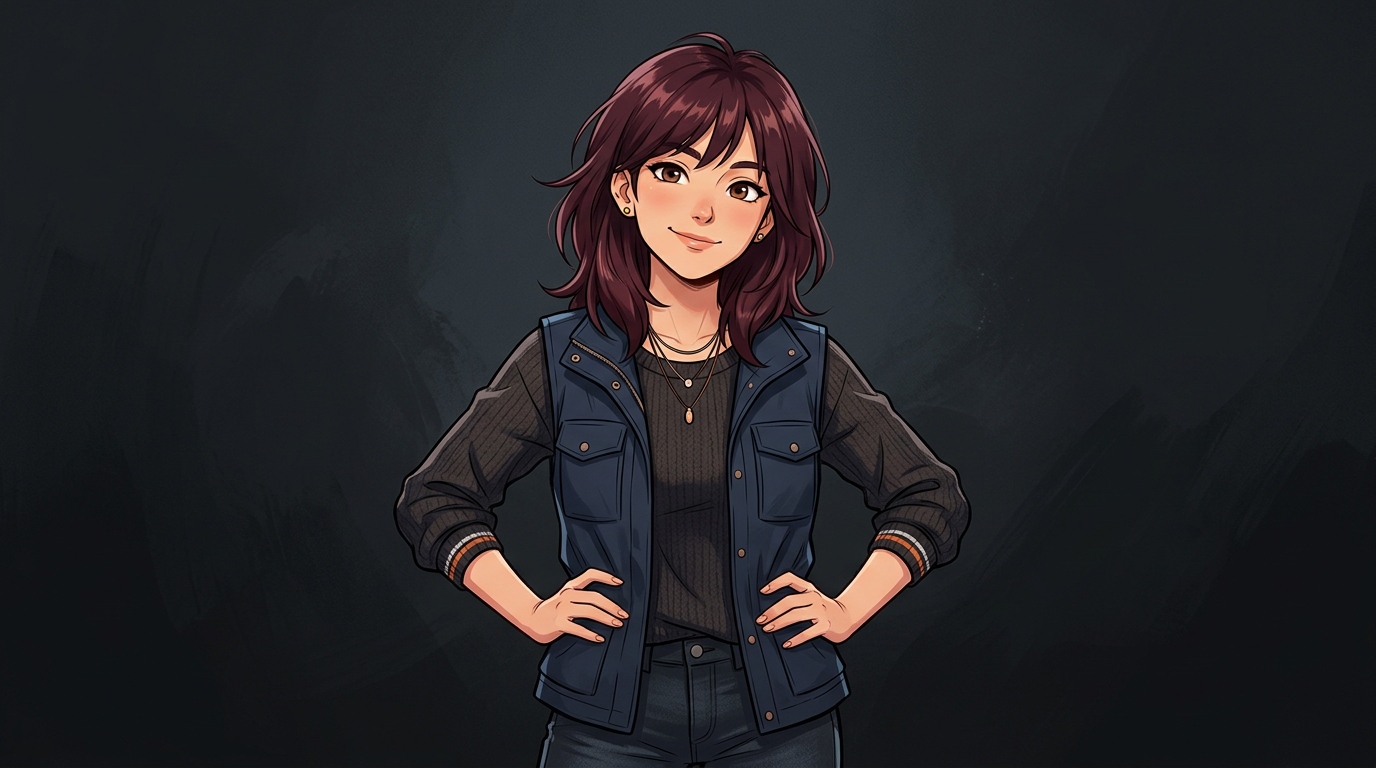
Standing is the AI default fallback — if you don't specify a pose, you get a character standing stiffly, arms at sides, staring at the camera. Adding a standing modifier transforms that stiffness into intention. A character standing with hands on hips reads as confident. The same character standing with arms crossed reads as guarded. These small keyword changes produce entirely different illustrations from the same character reference.
- standing with hands on hips The most versatile standing pose — works for confident heroes, impatient sidekicks, and authority figures. Pairs well with slight head tilt for extra personality.
- standing with arms crossed Guarded, skeptical, or thoughtful. Adds instant edge to character who might otherwise read as passive. Works best paired with slight eyebrow raise or smirk.
- standing with hands behind back Formal, respectful, or hiding something. Military characters, butlers, shy kids clutching a secret behind their back.
- standing with one hand on hip Casual confidence. The asymmetrical version feels more natural than both-hands-on-hips. Good default for characters who should look relaxed but engaged.
- standing with hands in pockets Casual, cool, or nervous. Front pockets = relaxed. Thumbs hooked in pockets = cowboy casual. Hands shoved deep = anxious or cold.
- standing with arms outstretched Welcome, celebration, or showing scale. "Come in!" or "Look at this!" Pairs with upward gaze for wonder, straight gaze for invitation.
- standing at attention Military, school, or formal ceremony. Straight spine, arms at sides, chin up. Instant authority or submission depending on context.
- leaning on one leg Contrapposto — the classical sculpture pose. Weight on one leg, other knee bent. Adds natural asymmetry and movement to standing. Default for fashion illustration.
- standing with feet apart, arms raised Victory pose, sports celebration, or superhero landing prep. Wide stance = power. Pairs with upward camera angle for maximum heroic impact.
- standing with arms wrapped around self Cold, self-comforting, or vulnerable. One arm across body holding opposite elbow. Subtle body language that reads as shy or uncertain without being explicit.
Sitting Pose Prompts
Sitting grounds a character. It signals rest, conversation, or focused activity. For narrative work — children's books, comics, visual novels — sitting is where characters read, eat, talk, wait, think, and connect. The key to sitting prompts is specifying what the character sits on and how they sit on it. A character sitting on the edge of a chair reads as anticipation; the same character sinking into an armchair reads as exhaustion.
- sitting cross-legged The universal children's book pose. Reading, playing, listening, circle time. Works on floor, grass, bed, or rug. Default for classroom and library scenes.
- sitting on edge of chair, leaning forward Anticipation, intense conversation, or about to stand up. Hands on knees or gripping chair edge. Forward lean = engagement.
- sitting with knees pulled to chest Comfort, sadness, or introspection. Arms wrapped around knees. Makes character feel small. Classic for bedroom scenes and emotional moments.
- sitting with legs dangling Perched on wall, dock, high chair, or counter. Implies child or shorter character. Carefree or contemplative depending on gaze direction.
- sitting with one leg tucked under Casual conversation pose. Asymmetrical and natural. Works on couch, bed, or picnic blanket. Good default for dialogue scenes.
- sitting with legs stretched out, leaning back on hands Relaxed, lazy afternoon, or post-activity rest. Head tilted back, eyes closed or looking up. Beach, park, or bedroom floor.
- sitting on heels (seiza) Japanese formal sitting, meditation, or tea ceremony. Also used for attentive children waiting. Straight spine, hands on thighs.
- sitting with legs over armrest Casual, slightly rebellious, or too comfortable. Legs draped over chair or couch arm. Signals ownership of space.
- sitting at desk, hands on keyboard Work, study, or gaming scenes. Head slightly down, focused expression. Modern context for any character age.
- sitting on floor against wall Waiting, tired, or hiding. Knees up or legs stretched. Hallway, bedroom corner, backstage. Universal pose for "waiting my turn."
- sitting backwards on chair, arms resting on back Casual authority or "cool teacher" energy. Chest against chair back, arms folded on top. Breaks formality — signals approachable authority.
- sitting in lotus pose Meditation, yoga, or spiritual scenes. Full or half lotus. Pairs with closed eyes, serene expression. Also reads as pretzel-like flexibility for younger characters.
Kneeling Pose Prompts
Kneeling is one of the most underused pose categories. It creates visual contrast against standing and sitting pages, and opens up a range of emotional interactions — discovery, care, pleading, proposing, reaching toward smaller characters or animals. A character kneeling gets physically closer to the ground, which changes the camera angle and adds depth to scene composition.
- kneeling on one knee Proposing, examining something on the ground, reaching toward a child or animal. The raised knee creates a natural arm-rest. Pairs with downward gaze for discovery, upward gaze for devotion.
- kneeling on both knees Pleading, praying, or exhausted collapse. More vulnerable than one-knee kneel. Arms can hang limp, reach forward, or press together. High-emotion pose.
- kneeling while reaching forward Offering something, picking up an object, or reaching toward another character. One arm extended, weight shifted forward. Creates natural diagonal composition.
- kneeling with hands on thighs Attentive waiting. Seiza-adjacent but less formal. Good for characters observing something at ground level — gardening, examining a bug, watching a small animal.
- kneeling and leaning on hands Examining ground-level detail, reading a map spread on floor, or exhausted after physical activity. All-fours adjacent but more composed.
Ready to test these poses with a character that stays consistent?
Upload your character once. Generate them in any pose — standing, sitting, kneeling, crouching — without the face drifting between poses. The reference-first workflow locks identity across every angle and body position.
Try Turnaround Sheet free →Free tier: 40 credits every month. No credit card.
Crouching and Squatting Pose Prompts
Crouching adds tension and curiosity. It's the pose of adventure — characters crouch when they explore, hide, prepare to spring, or examine something fascinating at ground level. A crouching character creates immediate visual interest because the body compresses, the center of gravity shifts, and the composition gains a coiled-energy feel.
- crouching with hands on ground Inspecting tracks, hiding behind cover, or preparing to sprint. Weight forward, one hand touching ground. Tense, alert, ready to move.
- squatting with elbows on knees Casual street-level pose. Waiting, watching, or deep in thought. Hands clasped in front. Good for urban/gritty character context.
- crouching on balls of feet Stealth mode. Silent, balanced, ready to spring. Knees tucked close to chest, weight centered. Ninja, spy, or curious child sneaking a look.
- crouching with one knee up, one down Transitional pose between kneeling and standing. Taking a knee. Sports huddle or military briefing. Good mid-action snapshot feel.
Lying and Reclining Pose Prompts
Lying poses are essential for bedtime scenes, dreaming sequences, lazy afternoons, and moments of rest or vulnerability. A character lying down changes the camera framing — you can shoot from above, from the side, or from the character's perspective looking up. These poses also work well for injury, exhaustion, or surrender scenes.
- lying on back, arms at sides Sleeping (straight), surrender, or exhaustion. Symmetrical and still. Classic for bedroom scenes, hospital beds, or stargazing.
- lying on stomach, arms outstretched Floor reading, daydreaming, or playing. Chin propped on hands or one arm. Ankles crossed in the air adds playful touch. Classic children's illustration pose.
- lying on side, head propped on hand Relaxed conversation, picnic, or lounging. One elbow on ground, body curved. Natural for dialogue scenes and campfire moments.
- lying on back, one knee bent Relaxed wakefulness — not quite asleep but comfortable. Arms behind head or one hand on stomach. Good for thinking/contemplation scenes.
- fetal position Scared, sad, tired, or feeling small. Knees to chest, arms wrapped around legs or self. High-emotion vulnerable pose. Works for both children and adults.
- sprawled on back, limbs spread Exhausted collapse, snow angel, or "starfish" sleep. Arms and legs wide. Exaggerated exhaustion comedy or genuine post-battle collapse.
Leaning Pose Prompts
Leaning adds environmental interaction — the character physically connects to the setting. A lean against a wall, tree, doorway, or table makes the environment feel real and the character feel grounded. Leaning also creates natural diagonal lines in composition, breaking the vertical-horizontal grid of standing/sitting characters.
- leaning against a wall, one foot up Cool, waiting, or casual conversation. Shoulder blade against wall, one foot flat against wall behind. Classic "waiting for someone" pose.
- leaning against a tree Contemplative outdoor scene. Back or shoulder against trunk. Arms crossed or hands in pockets. Creates relaxed, nature-connected mood.
- leaning on a table with both hands Examining something on the table, intense conversation, or "we need to talk." Weight forward, arms straight. Authority or urgency signal.
- leaning in a doorway, arms crossed Blocking exit, casual arrival, or "we need to talk." One shoulder against doorframe. Half-in half-out transitional framing.
- leaning forward with elbows on knees Intense listening, worry, or waiting-room anxiety. Seated lean — different from standing wall lean. Hands clasped or hanging.
- leaning back in chair, hands behind head Confidence, relaxation, or smug satisfaction. Chair tilted back on two legs. Feet up on desk adds power move energy. Classic "I've figured it out" pose.
Arm and Hand Position Prompts
Arms and hands are where personality lives — stack these on any base pose
Arms and hands carry the emotional subtext of a pose. The same character sitting cross-legged reads entirely differently with hands on cheeks (dreamy) vs arms crossed (defensive). These arm and hand modifiers layer on top of any base pose from the sections above. Stack them: base pose → arm position → hand gesture → emotional context.
- arms crossed Defensive, confident, or cold. High on chest = defensive. Loose and low = relaxed confidence. The most versatile arm modifier.
- hands on hips Confidence, impatience, or authority. Akimbo stance. Elbows out. Pairs with wide stance for maximum presence, narrow stance for sass.
- arms behind back Formal, patient, or hiding something. Hands clasped behind back. Straight posture. Butlers, teachers, kids with a secret.
- one arm across body holding opposite elbow Shy, self-comforting, or cold. Asymmetrical. More vulnerable than full arms-crossed. Good for uncertain or nervous characters.
- arms raised above head Celebration, stretching, or surrender. Both arms up = victory or "don't shoot." One arm up = hailing or reaching. Body language of openness.
- hands clasped in front Polite, nervous, or formal waiting. Fingers interlaced. Can read as demure or anxious depending on grip tightness and shoulder position.
- hands in pockets Casual, nervous, or cold. Thumbs out = confident casual. Hands fully in = uncertain or hiding. Front pockets only; back pockets reads as different energy.
- hands on knees Ready to stand, catching breath, or attentive listening. Seated position. Leaning forward slightly. Sports huddle, classroom, or "let me tell you something."
- fingers interlaced on lap Formal sitting, listening, or nervous. Hands still and composed. Contrasts with fidgeting. Good for characters trying to appear calm.
- hands pressed together (prayer hands) Thank you, please, or apology. Fingertips to chin or chest. Universal gesture across cultures. Can read as genuine or performative depending on expression.
- pointing with index finger Accusation, direction, or emphasis. "You." "Look there." "This one." Arm extended or bent. Sharp vs casual depending on arm tension.
- hands open, palms up Questioning, offering, or "I don't know." Universal gesture of openness. Shoulders slightly raised adds confusion. Palms down = calming or "settle down."
- hand on chin, thinking pose Contemplation, evaluation, or skepticism. Index finger along jaw, thumb under chin. The universal "hmm" pose. Rodin's Thinker for AI generation.
- hand on chest Sincerity, pledge, or "I'm touched." Palm flat over heart. Sincere emotion or formal oath. Pairs with slight forward lean for earnestness.
- hands touching face (both hands on cheeks) Surprise, delight, or "Home Alone" scream. Fingers spread on cheeks. Wide eyes. Also reads as blushing/embarrassment with downturned gaze.
Full Body Pose Keywords
Broader compositional keywords that frame the entire character
These keywords describe the character's overall physical attitude rather than a specific body-part position. Use them as the foundational layer of your prompt stack: full-body keyword → base pose → arm/hand modifier → emotional context. One of these often replaces a category-specific pose keyword when you want a more general or dynamic framing.
- contrapposto Classical standing with weight on one leg. Natural S-curve through spine. Asymmetrical and alive. Default for fine art and fashion illustration.
- dynamic pose Action, movement, mid-gesture. Body twisted, limbs at different angles. Diagonal composition lines. Good default when "standing" feels too stiff.
- power pose Wide stance, chest out, chin up. Takes up space. Confident to aggressive depending on expression. Boardroom, superhero, or "I own this room."
- relaxed pose Soft shoulders, natural slump, no tension. Unposed-looking. Good for slice-of-life, casual dialogue, or "real person" energy vs posed illustration.
- symmetrical pose Front-facing, balanced, formal. Both sides mirror. Passport photo energy or religious iconography. Character facing directly at viewer.
- twisting at the waist Mid-turn, looking over shoulder, or reaching behind. Dynamic torque. Creates diagonal tension. Good for "caught mid-action" feel.
- mid-stride walking pose Walking with purpose. One foot forward, arms slightly swinging. More dynamic than standing, less frozen than full run. Good default for "character going somewhere."
The Pose Prompt Formula
The most reliable way to build a pose prompt is to layer specificity. Start broad, then narrow. Each layer adds information the AI can use, and the final sentence gives the generator everything it needs in a single read.
girl with curly red hair and blue dresskneeling on both kneeshands open, palms upin a garden with butterfliesgirl with curly red hair and blue dress, kneeling on both knees, hands open palms up, in a garden with butterfliesThat single sentence gives the AI everything it needs: who the character is, what position they're in, what their hands are doing, and where they are. Each layer is independently adjustable — swap the base pose for "sitting cross-legged" and the same character is now reading in the garden instead of kneeling in it.
Generate your character in any pose — same face, every time
Lock your character once, then generate them in any pose, angle, or expression — same identity, different body language. Free tier, no credit card.
Start generating →FAQ
Ready to lock your character?
Keep your character consistent across every angle, pose, and expression — lock once, generate infinitely.
Start for FreeFree tier: 40 credits every month. No credit card.