
Create Webtoon Character Art in Pixel Art Style
Pixel art webtoons are carving out a distinct niche on Tapas and WEBTOON Canvas — a retro game aesthetic that triggers nostalgia while demanding precision. Every pixel counts when a character’s expression has to read at vertical-scroll dimensions on a phone screen. Unlike smooth digital painting, pixel art communicates emotion through constrained grids: a single-pixel shift in an eyebrow changes the entire mood, a 2-pixel mouth curve distinguishes smirk from smile. The challenge for webtoon creators is maintaining that crisp, grid-aligned look across an entire series without pixel drift or inconsistent sprite scaling. This guide shows you how to generate a pixel art character with 8-angle sprite sheets, expression packs for key comic moments, and pixel-perfect exports sized for vertical-scroll panels. <strong>Answer: Use multi-angle AI generation with pixel art style prompts to produce grid-consistent sprite sheets at 128x128 per frame, expression packs for webtoon storytelling beats, and panel-ready assets at common vertical-scroll dimensions with nearest-neighbor scaling.</strong>
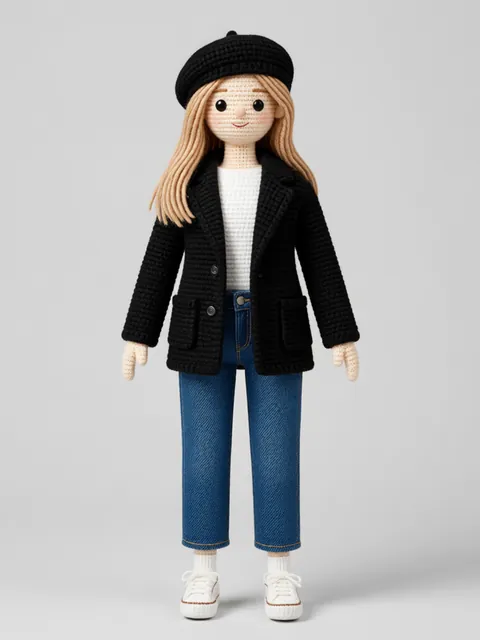
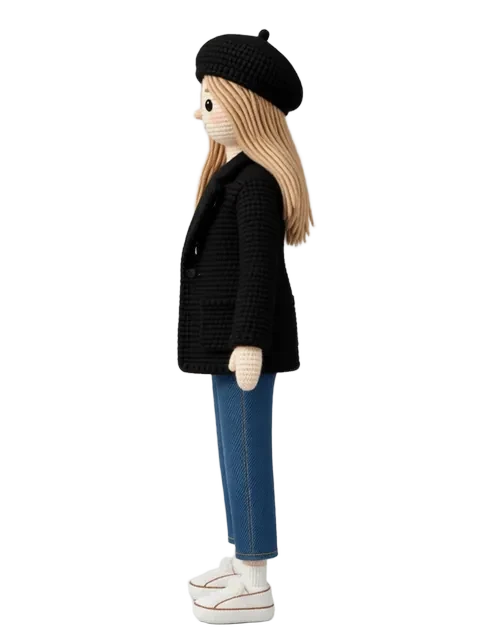
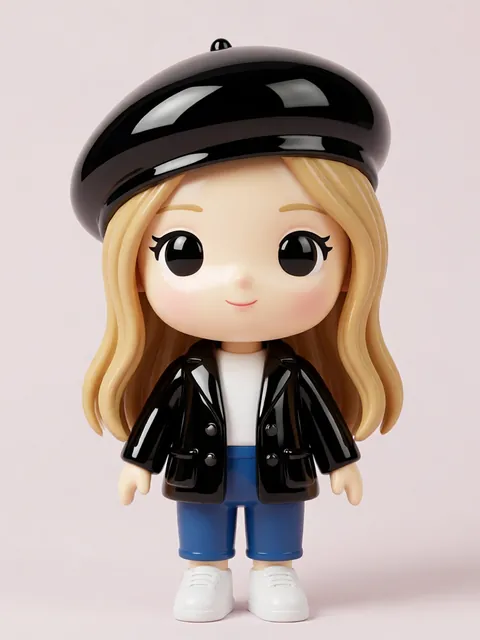
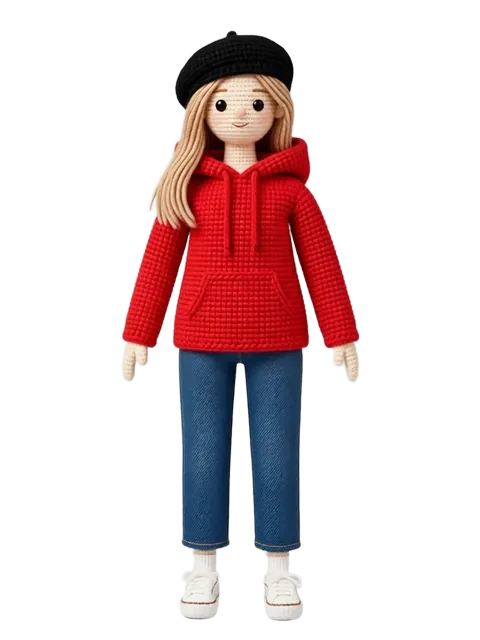
- 01
Design Webtoon Character with Bold Pixel-Readable Features
Pixel art demands simplification. Design your webtoon character with bold silhouettes and high-contrast features: large readable eyes (4-6 pixels wide minimum), distinct hair shapes defined by color blocking not strand detail, and clothing with 2-3 tone shading per garment. Avoid gradients and soft edges — pixel art works in flat color planes. Include palette specs: 16-32 colors max for the character, using a defined web-safe or PICO-8-inspired palette to maintain retro authenticity.
- 02
Generate Pixel Art 8-Angle Sprite Sheet at 128x128 Per Frame
Generate front, front-right, right, back-right, back, back-left, left, and front-left views at 128x128 pixels per frame. Use strict pixel art parameters: "nearest-neighbor scaling, no anti-aliasing, hard edges, limited 24-color palette, pixel grid aligned." Verify pixel-perfect consistency across angles — the character’s height in pixels, the thickness of limbs, and the color of each pixel block must be identical across all 8 frames. Even a 1-pixel variance breaks the sprite sheet illusion.
- 03
Create Pixel Art Expression Pack for Webtoon Key Moments
Design 8 expressions for key webtoon storytelling beats: neutral, surprised (wide eyes +2px), angry (angled brows -1px), sad (teardrop 2x3px), laughing (closed-arc eyes), determined (shadowed brow), flustered (blush dithering), and smug (half-lidded). Each expression modifies only the facial pixel region while keeping the body frame identical. Export as a labeled grid sheet at 2x scale (256px per expression) for easy panel insertion.
- 04
Downscale to Vertical-Scroll Panel Sizes Pixel-Perfect
Webtoon panels are typically 800px wide with variable height for vertical scroll. Downscale your character to panel-appropriate sizes: full-body shots at 400-500px tall, half-body at 200-250px, and headshots at 100-120px. Use ONLY nearest-neighbor interpolation — bilinear or bicubic scaling introduces blur that destroys the pixel art aesthetic. Create a scaling reference sheet showing your character at every panel size to ensure consistent pixel-grid alignment throughout your series.
- 05
Export Sprite Sheet and Panel-Ready Assets
Export the 8-angle sprite sheet as a single PNG with 1px grid lines between frames at 2x scale (256px per frame) for source material. Export the expression pack as a labeled grid. Export your character at each panel size as individual transparent PNGs organized by shot type. All exports must use indexed color mode (not RGB) to preserve the exact palette. Include a README with your hex color palette and scaling rules for any assistant artists working on the series.
- Define your pixel art palette as hex codes before generating — palette consistency is non-negotiable in pixel art
- Test character readability at phone screen width (360-390px) — if expressions blur, simplify further
- Use a 1px black outline on characters to ensure separation from backgrounds in webtoon panels
- Keep character height consistent in pixels across all 8 sprite angles — use a pixel ruler overlay
- Dithering patterns (checkerboard, 2x2) add shading without adding colors to your limited palette
- Export at 2x or 3x integer scale for webtoon use — never fractional scales that break the pixel grid
- The expression pack should share a single base body — only the face pixels change between expressions
- Name your palette colors (e.g. "skin-shadow," "hair-highlight") so you can prompt consistently across generations
Frequently asked questions
Why pixel art for a webtoon instead of standard digital art?
What pixel dimensions should my webtoon character be?
How do I prevent pixel drift across episodes?
What does the free tier support for pixel art generation?
Ready to create consistent character views?
Upload a reference image and generate multi-angle views that stay true to your character.
Start generating