
Create VTuber Character Art in Cel-Shaded Comic Style
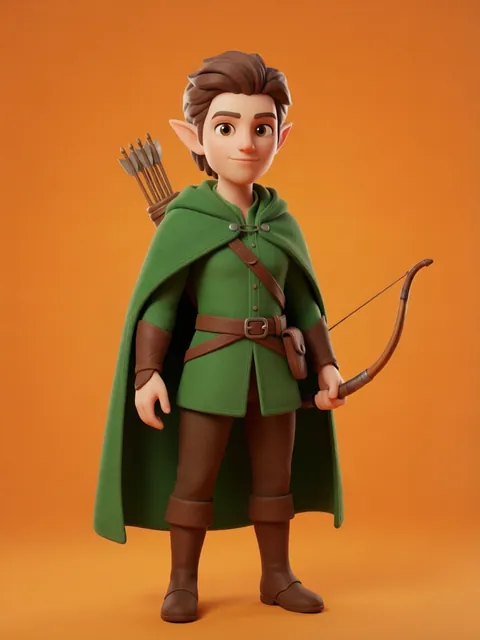
Most VTubers default to the soft-gradient anime look — which means a cel-shaded comic-book aesthetic instantly differentiates your avatar in a crowded streaming landscape. Bold ink lines, flat color planes, and 2-3 tone shading create a graphic novel presence on stream that reads cleanly at any resolution and holds its own against busy overlay elements. The cel-shaded look also rigs beautifully: clean ink contours give Live2D mesh editors unambiguous boundaries to work with, and the limited shading tones mean fewer mesh deformations to debug. Whether you’re a VTuber tired of blending in or a rigger who wants easier mesh work, this guide covers generating an 8-angle cel-shaded reference sheet, a stream-ready expression pack, and Live2D-compatible exports with rigger-facing ink-line notes. <strong>Answer: Use multi-angle AI generation with cel-shaded comic-book style prompts to produce bold-ink, flat-color VTuber reference sheets with consistent ink weight across all 8 angles, an 8-expression pack, and layered PNG exports ready for Live2D rigging.</strong>
- 01
Design VTuber Persona with Comic-Book Silhouette
Start with a silhouette-first design approach — your VTuber’s outline should be recognizable even as a solid black shape. Key cel-shading design rules: hair defined by 2-3 large color blocks (not individual strands), clothing with crisp fold lines using 2px ink strokes, and facial features with a clean line-art mouth that reads at streaming resolution. Avoid gradients, soft shadows, and blend modes — cel shading is purely flat colors separated by ink lines. Include a 6-color base palette plus 2 shadow tones per base color.
- 02
Generate 8-Angle Cel-Shaded Reference with Consistent Ink Weight
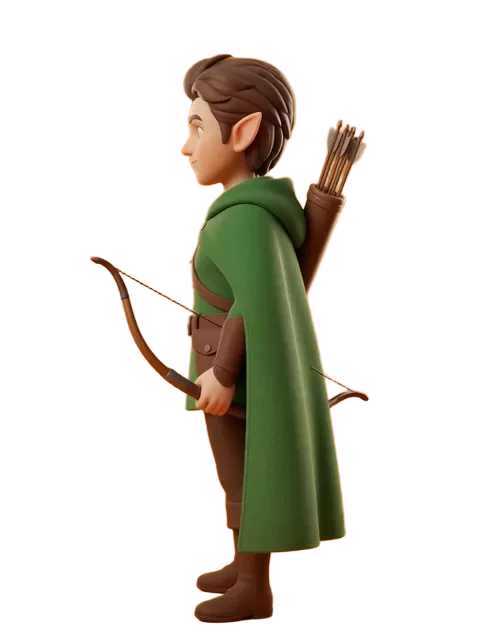
Generate front, front-right, right, back-right, back, back-left, left, and front-left views with uniform ink line weight (1.5-2px) and identical flat-color palette. The ink weight consistency is critical — if line thickness varies between angles, the VTuber will look like different characters when rotating on stream. Verify that shadow-tone placement follows the same light source direction (typically top-left) across all 8 angles. Cel shading’s charm is its graphic consistency; inconsistency defeats the style.
- 03
Create 8-Expression Pack in Cel-Shaded Style
Build 8 stream-ready expressions: neutral, happy (wide eyes, curved mouth), surprised (raised brows, open mouth), angry (angled brows, clenched teeth), sad (downturned mouth, half-closed eyes), laughing (closed-arc eyes, open mouth), smug (half-lidded, smirk), and embarrassed (blush flat-color overlay, averted eyes). Each expression modifies the face region while maintaining the ink weight and color palette. Export as individual PNGs with transparent backgrounds, each labeled for your streaming software’s hotkey mapping.
- 04
Prepare Live2D-Compatible Layered Exports
Separate your front-view character into Live2D rigging layers: head base, eyes (left/right), eyebrows (left/right), mouth (open/closed/smile), hair front, hair back, torso, arms (left/right), and accessories. Each layer must be a cleanly separated PNG with the ink outline fully contained within the layer boundary — overlapping ink lines between layers cause mesh deformation artifacts. Label each layer file with its rigging group and z-index for the rigger.
- 05
Export for Rigger with Cel-Shading Ink-Line Notes
Package all assets in a rigger-ready folder: the 8-angle reference sheet as a single PNG, the 8-expression pack as individual files, the layered PSD/PNG set, and a "cel-shading notes" document. The notes should specify: ink line weight in pixels, exact hex codes for every flat color and shadow tone, light source direction, and any areas where the cel-shading hard-edge rule is intentionally broken (e.g., soft blush overlay for the embarrassed expression). Clear notes reduce rigging revision cycles by 50% or more.
- Test character readability at 200x200px — the size viewers see in a Twitch sidebar — cel shading should hold up
- Use exactly 2 shadow tones per base color: a mid-shadow at 60% brightness and a deep shadow at 30% brightness
- Ink lines should be pure black (#000000) on a separate layer so the rigger can adjust opacity independently
- Avoid cel-shading gradients on the mouth — a hard-line mouth rigs more cleanly than a soft-gradient one
- The 8-angle reference must show the same ink weight in every view — use a 2px brush preset that doesn’t scale
- Include a "color swatch" card in your exports with every hex code labeled by body part
- Comic-book cross-hatching can replace flat shadows for a grittier cel-shaded look if your persona fits it
- Export expression PNGs at 2048x2048 minimum — Live2D riggers need resolution headroom for mesh deformation
Frequently asked questions
How is cel-shaded VTuber art different from standard anime VTuber style?
Do cel-shaded VTuber models work well with Live2D?
What resolution should my cel-shaded VTuber exports be?
Can I try cel-shaded VTuber generation on the free tier?
Ready to create consistent character views?
Upload a reference image and generate multi-angle views that stay true to your character.
Start generating