
Create Children's Book Characters in Studio Ghibli Style
Studio Ghibli's visual language — soft watercolor skies, gentle character expressions, and a nostalgic warmth that feels like a remembered childhood — translates beautifully into children's picture book illustration. An EZ Character multi-angle reference generated in this style gives you a reusable character model for every page of a 32-page picture book, so your protagonist looks consistent whether they're facing the reader, peeking around a tree, or walking away into the next spread. Answer: Design the character with Ghibli-esque soft features (round faces, warm eyes, natural proportions), generate an 8-angle watercolor reference sheet with the characteristic soft-edge watercolor wash, overlay a paper texture for print authenticity, build a Ghibli palette of soft greens and warm neutrals sampled from the reference, and export at 300dpi CMYK for offset printing compatibility.
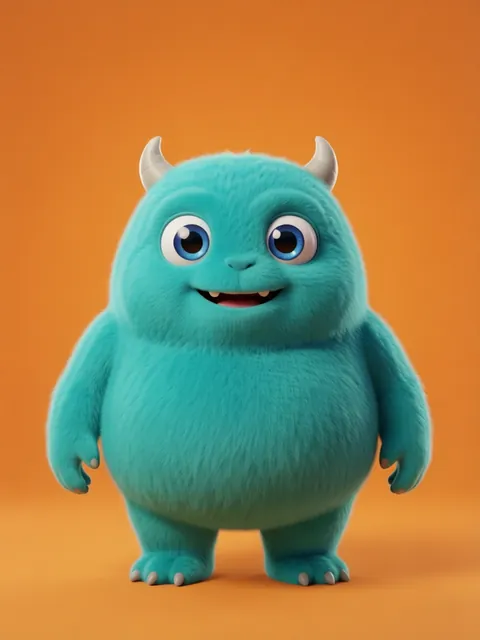



- 01
Design the character with Ghibli-esque soft proportions
In your EZ Character prompt, specify "Studio Ghibli watercolor style — round face, gentle almond eyes, natural child proportions, soft linework, watercolor wash shading, no harsh outlines." Ghibli characters feel approachable: slightly oversized heads on child bodies, expressive but not exaggerated eyes, and a sense of weight and groundedness. Avoid anime proportions (too sharp) and Disney proportions (too elastic) — aim for the in-between naturalism that defines Ghibli's character design.
- 02
Generate an 8-angle watercolor reference sheet
Request all 8 angles (front, 3/4 front L/R, profile L/R, 3/4 back L/R, back) with "soft watercolor edge bleeding, granulating pigment texture, cold-press paper background." The watercolor effect should show pigment pooling at edges and visible brushstroke grain — the hallmarks of traditional watercolor that give picture books their handcrafted warmth. Review each angle for the soft edge quality and ask for regeneration if the watercolor effect looks digital or airbrushed rather than painterly.
- 03
Overlay paper texture for print authenticity
In your image editor (Photoshop, Procreate, or GIMP), place the character reference on a layer above a high-resolution watercolor paper scan (cold-press, 140lb texture). Set the character layer's blend mode to Multiply — the paper grain shows through the watercolor washes and white areas take on the paper's natural off-white tone. Add a second texture layer (Multiply mode at 15-20% opacity) with subtle paper fiber and deckle edge scans for the authentic picture book feel.
- 04
Build a Ghibli-inspired color palette from the reference
Sample 8-12 colors from the generated character using an eyedropper tool. Ghibli palettes favor soft sage greens, warm ochre and cream neutrals, dusty blues, muted coral pinks, and golden-hour amber tones. Avoid pure primaries — every Ghibli color has a slight warmth or atmospheric haze dialed in. Save the palette as swatches and name each value descriptively: "Mei's Dress Coral," "Forest Shadow Green," "Sky Wash Blue." Use this palette as a constraint — every illustration in the book draws from these exact colors for tonal unity.
- 05
Export at 300dpi CMYK for offset printing
Picture books print on coated or uncoated offset stock. Set your canvas to the trim size (typically 8.5x11 inches or 8x10 inches for picture books) at 300dpi. Convert the color profile from sRGB to CMYK using the printer's recommended profile (GRACoL 2013 for North American sheetfed, or FOGRA51 for European). Add 0.125-inch bleed on all sides. Soft-proof (View > Proof Colors) with "Simulate Paper Color" checked — watercolor art in CMYK loses some vibrancy, so boost saturation 5-10% before conversion to compensate.
- Ghibli watercolor characters look best on textured backgrounds — avoid flat white. Generate your reference with a "cold-press watercolor paper, subtle cream tone" background rather than pure white or transparent
- Children's book printers use either sheetfed offset (coated stock) or web offset (uncoated). Coated stock preserves more color saturation; uncoated has a matte, tactile feel that suits watercolor. Ask your printer which before the final CMYK conversion
- The standard 32-page picture book layout is self-ended: pages 1-2 and 31-32 are endpapers, leaving 14 full spreads. Plan your character angles around key spreads — front angle for the title page, 3/4 angles for action scenes, back angle for the emotional low point
- For a consistent Ghibli atmosphere, generate environmental reference images as well — "Ghibli watercolor forest background," "Ghibli kitchen interior" — so your character exists in a coherent world, not floating in different art styles per page
- Picture book art directors expect character consistency across expressions. Generate additional expression variants (happy, curious, sad, determined) for the front and 3/4 angles — expressions are more important than full 8-angle rotation in children's books
- Watercolor art can look washed out in print thumbnails. Test-print one spread at the actual trim size before committing to the full book — color, contrast, and paper texture visibility shift dramatically from screen to offset
- Ghibli backgrounds use atmospheric perspective: distant elements are lighter, cooler, and less detailed than foreground elements. Apply this rule when composing spreads — characters in the foreground with soft, hazy landscapes behind them
- Include a white border (0.25-0.5 inches inside the trim line) of no critical art — picture book binding (perfect or Smyth-sewn) consumes part of the inner margin. Your character's face should never fall into the gutter between pages
Frequently asked questions
What resolution and color space does a 32-page picture book require for print?
Is the Ghibli watercolor style achievable on the free tier?
Can I legally use a Ghibli-inspired AI character in a published children's book?
What trim size is standard for children's picture books?
Ready to create consistent character views?
Upload a reference image and generate multi-angle views that stay true to your character.
Start generating