
Create Character Turnaround for 3D Printing Figurine
Custom 3D-printed figurines have transformed tabletop gaming, cosplay prop-making, and collectible design. Whether you’re commissioning a Hero Forge-style custom miniature, handing off a character to a sculptor for a one-off resin statuette, or preparing reference for a tabletop miniature production run, a 3D-printing-optimized character turnaround is a fundamentally different asset from a standard reference sheet. It requires: a neutral A-pose or T-pose (not an action pose that creates undercuts), orthographic front/side/back views with pixel-aligned proportions for the sculptor’s reference planes, 360-degree detail references that show complex geometry from the angles a 3D printer nozzle or SLA laser approaches from, and practical production notes about height, material, and support-structure considerations. Answer: Design the character in a print-optimized neutral A-pose with arms at 45 degrees from the body (clearing underarm overhangs), generate an 8-angle turnaround with neutral expression, add detail callouts for areas sculptors typically struggle with, export orthographic front/side/back views at 1:1 scale, and package with height-in-mm and material-consideration notes.
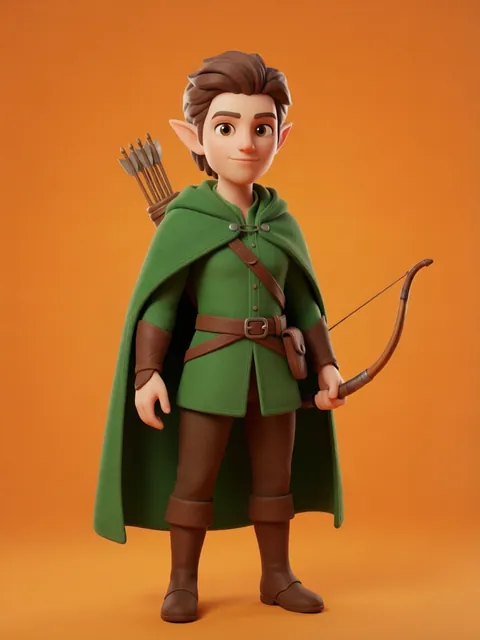
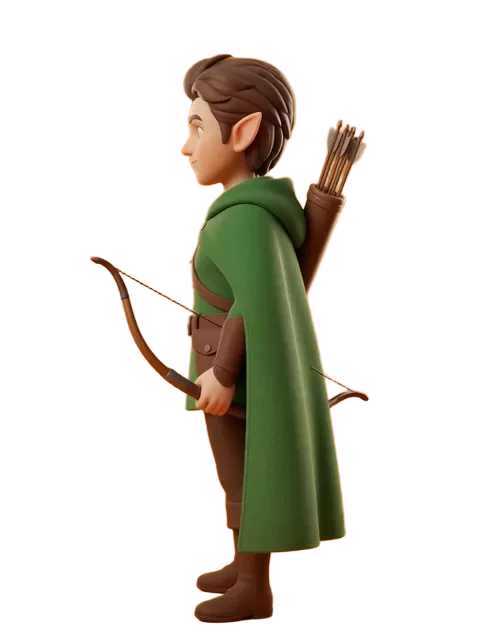
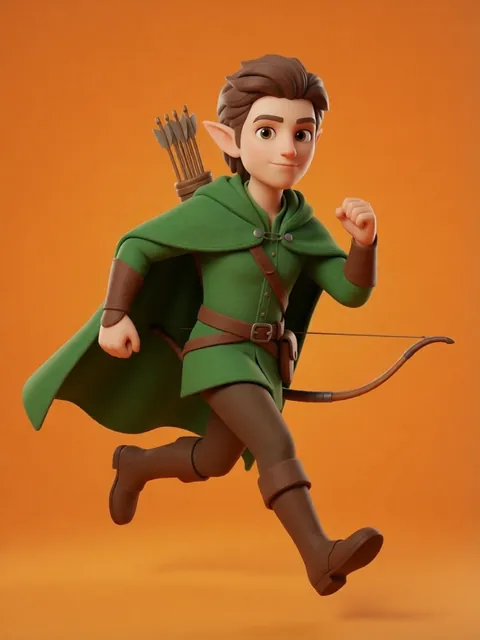
- 01
Design character in neutral A-pose optimized for 3D printability
Pose the character in A-pose: feet shoulder-width apart, arms extended 45 degrees from the torso, fingers slightly spread (not touching, not clenched), head facing forward with neutral expression. The A-pose is superior to T-pose for 3D printing because: (1) 45-degree arm angle clears the underarm overhang (T-pose creates a 90-degree undercut requiring support material), (2) arms at 45 degrees fit within the bounding-box width of the shoulders (T-pose arms extend beyond and increase print volume), and (3) the slight spread creates natural drainage angles for SLA resin printing. Define character details with 3D printing constraints in mind: minimum wall thickness for structural integrity (0.8mm at 28mm scale, 1.5mm at 75mm scale), no floating elements (all parts must connect to the main body mass), and cape/cloth elements with minimum 2mm thickness (thin fabric generates non-manifold geometry that slicers reject).
- 02
Generate 8-angle turnaround with neutral expression and pose
Generate front, front-right, right, back-right, back, back-left, left, and front-left views. Every prompt must specify: "neutral A-pose, arms 45 degrees from body, neutral expression, orthographic projection, consistent character height across all views, front/side/back views pixel-aligned at matching scale." The neutral expression is critical: a smiling character sculpted at 28mm scale will have the smile read as a facial crease rather than an expression. Neutral face lets the sculptor see the underlying facial structure clearly. Request even, diffused studio lighting with no dramatic shadows so surface geometry reads correctly. Keep the background a neutral 50% grey with a visible scale grid (10mm squares) for the sculptor to calibrate dimensions.
- 03
Add detail callouts for complex geometry areas
Create a separate annotation layer or companion sheet highlighting the character areas that are geometrically complex and prone to sculpting misinterpretation. Common callout targets: weapon attachment points (how the sword scabbard connects to the belt and where the connection seam should be hidden), cape/cloak connection (where fabric attaches to shoulders and how it drapes around the neck), hair volume (cross-section view showing hair mass depth from scalp surface, so the sculptor doesn’t make hair too thin and fragile), and undercut areas (regions where the 3D printer will need support material, marked so the sculptor can add subtle geometry to make them self-supporting). Use leader lines with 2px stroke in a contrasting color (magenta or cyan) for callout visibility.
- 04
Export front/side/back orthographic views at 1:1 scale reference
Export the front, right-side, and back views as true orthographic projections at exactly the same scale. All three views must have identical pixel-per-mm ratios so the sculptor can import them as reference planes in ZBrush, Blender, or Nomad Sculpt and have them align perfectly. Set the image DPI metadata to match the intended print scale: for a 75mm figure, export at 300 DPI with the character measuring exactly 75mm in the image (885 pixels at 300 DPI). Include a printed scale bar in the image (not just DPI metadata) because DPI can be stripped or misinterpreted by different software. Add dimension annotations: total height, shoulder width, chest depth, and head height, all in millimeters.
- 05
Package reference with height spec and print material notes
Assemble the final sculptor handoff package: (1) orthographic front/side/back with aligned scale, (2) 8-angle turnaround for detail reference, (3) detail-callout sheet with leader-line annotations, (4) specification document stating: intended figure height in mm, preferred print material with reasoning (SLA resin for high detail at 28-75mm scale, FDM PLA for figures over 150mm where layer lines are less visible, nylon SLS for functional/articulated figures), minimum wall thickness, support-structure considerations (mark areas where the sculptor should add subtle self-supporting geometry), and whether the model should be a single solid piece or split into keyed parts for multi-part printing. For resin printing, note any hollowing requirements (2mm minimum shell thickness, drainage holes at connection points) to reduce material cost and prevent uncured-resin trapping.
- The A-pose over T-pose is the single most impactful decision for printability. T-pose creates massive underarm overhangs that require support trees. A-pose arms at 45 degrees are nearly self-supporting on most printers
- At 28mm tabletop miniature scale, detail below 0.5mm will not print. Simplify fine textures, chainmail, and filigree patterns. What looks great as a 2D reference may be invisible or produce noisy surface artifacts when printed at miniature scale
- Capes and flowing fabric are the number one 3D printing failure point. Thin fabric geometry creates non-manifold edges, fails slicer validation, and breaks during support removal. Specify minimum 2mm cloth thickness at 75mm scale (0.8mm at 28mm scale)
- Weapons held across the body (two-handed sword grip, rifle across chest) create geometry bridges that are printing nightmares. Pose weapons alongside or behind the body, not crossing the torso, to avoid creating enclosed loops of geometry
- Hair should be sculpted as a solid mass with surface detail, not individual strands. Individual hair strands at 28mm scale are typically 0.1mm thick (far below minimum printable feature size) and will either fail to print or snap during handling
- Include a "print orientation" arrow on the reference: the optimal angle for SLA printing is typically 30-45 degrees tilted backward to minimize layer cross-section on the build plate. Note this on the sheet so the sculptor designs geometry that drains well at that angle
- For multi-part figures, design the keying system into the reference: male/female key pegs at connection points (neck, waist, arms) with 5-degree draft angle for easy assembly. Sculptors will thank you for thinking about assembly before they start sculpting
- FDM vs resin material choice affects the turnaround design. FDM (filament): larger minimum feature size (0.4mm nozzle), visible layer lines, better for large figures. Resin (SLA): 0.05mm detail, smooth surface, brittle, better for miniatures. Design the turnaround to the material: more surface detail is viable for resin, simplify for FDM
Frequently asked questions
What scale should I design my character turnaround for 3D printing?
Can I create 3D printing turnarounds on the free tier?
What is the difference between a game-art turnaround and a 3D-printing turnaround?
Should my character have a base/plinth in the turnaround?
Ready to create consistent character views?
Upload a reference image and generate multi-angle views that stay true to your character.
Start generating