
Convert Character Reference to VTuber Rig Sheet
VTubing has grown from a niche Japanese streaming phenomenon into a global content-creation industry, with Live2D Cubism as the dominant 2D rigging platform. The critical bottleneck in VTuber model creation is not the rigging itself but preparing the source art: a character illustration separated into discrete, riggable layers with clean boundaries, consistent part names, and a neutral front-facing pose that provides maximum deformation range for facial tracking. Converting a standard 8-angle character reference into a Live2D-compatible rig sheet means translating a turnaround designed for visual consistency into a parts-separated asset designed for mechanical articulation. Answer: Generate the 8-angle reference first to lock character identity, select the front-facing view as the rig base, regenerate the character with explicitly separated body parts and clean part boundaries, export individual PNGs following Live2D Cubism layer-naming conventions, and prepare the part-set for mesh parameter setup.
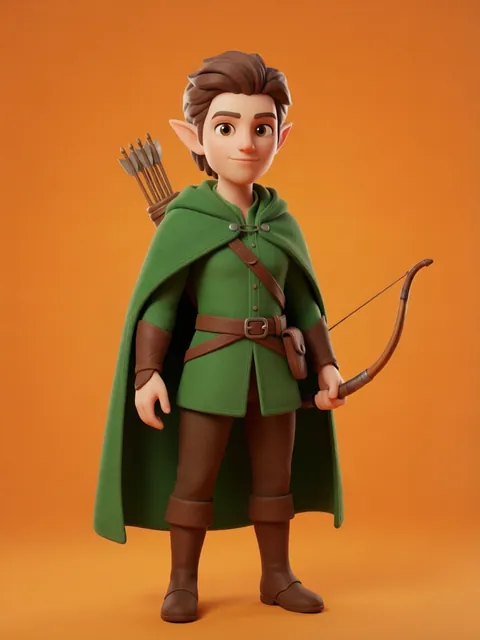
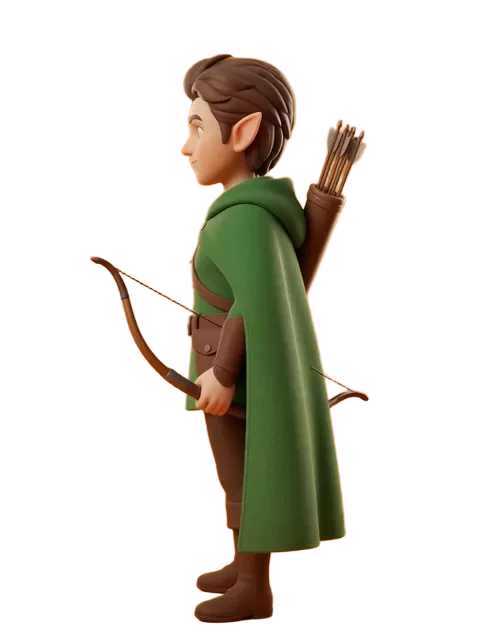
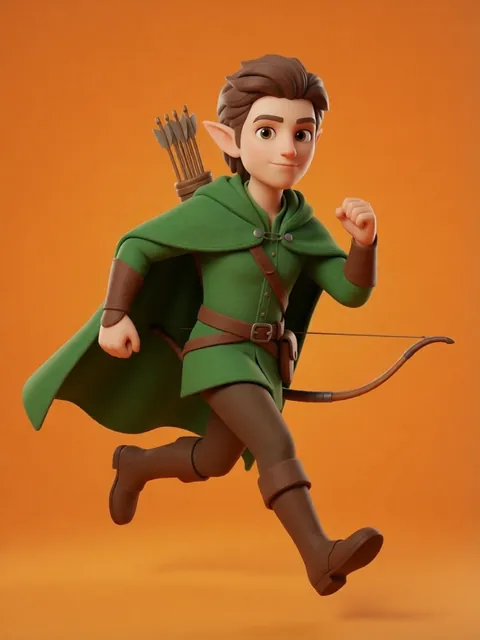

- 01
Generate 8-angle character reference for identity lock
Generate a full 8-angle character turnaround (front, front-right, right, back-right, back, back-left, left, front-left) of your VTuber model design. This step establishes the character’s visual identity across all viewing angles. The turnaround does not need part separation (that comes in step 3) but it must establish consistent hair style, clothing design, color palette, and accessory placement that will be preserved in the rig-sheet regeneration. Keep the front-facing angle as the primary reference; the remaining 7 angles serve as identity-anchoring documentation for the rigger.
- 02
Select front-facing view as the rig base
From the 8-angle set, isolate the front-facing view as your rig-base reference. This is the angle that will be regenerated with part separation. The face must be in true front view with neutral expression (no smile, no tilted head, no asymmetrical pose): this neutral-pose baseline is critical because Live2D deformation parameters (Angle X, Angle Y, Eye Open, Mouth Open, Brow Position) all deform from neutral. Mark the exact eye, mouth, nose, and face-outline positions on a reference layer so the part-separated regeneration preserves these coordinates exactly. Any shift in feature position between the reference and the part-separated version will cause tracking misalignment during rigging.
- 03
Regenerate character with separated body parts and clean boundaries
Generate a new front-facing character image with explicit part separation. Specify in the prompt: "character separated into discrete parts with clean boundaries, no overlapping edges, each part on its own visual plane: Hair_Front (bangs/fringe), Hair_Back (rear hair mass), Hair_Side_Left, Hair_Side_Right, Face (head outline with ears, no hair), Eyes_L, Eyes_R, Eyebrows, Nose, Mouth (with interior), Body (torso, no arms), Arm_L (upper and lower as one part), Arm_R, Clothing_Front, Clothing_Back, Accessories (each as named layer)." The background must be solid flat color (different from any character color) for clean extraction. Request "no anti-aliasing artifacts at part edges, hard clean boundaries between parts" because edge fringing creates visible seams during Live2D deformation.
- 04
Export layers as individual PNGs with Live2D naming convention
Extract each body part as a separate PNG file with alpha transparency, using standard Live2D Cubism naming: Hair_Front.png, Hair_Back.png, Face.png, Eyes_L.png, Eyes_R.png, Mouth.png, Body.png, Arm_L.png, Arm_R.png, plus any custom parts (Accessory_Headband.png, Tail.png, Wings.png). Each PNG must have the exact same canvas dimensions (e.g., 2048x2048) with the part positioned exactly where it sits in the composite image. Do not crop to part bounds; the canvas must be uniform so importing into Live2D preserves relative positioning. Verify that part boundaries have clean alpha edges with no color bleeding from adjacent parts or the background.
- 05
Prepare part set for Live2D Cubism parameter mesh setup
The final handoff package should include: (1) all individual PNG part files with uniform canvas size, (2) a composite reference PNG showing all parts assembled in their correct positions (the rigger’s alignment guide), (3) a part-list document mapping each PNG to Live2D texture atlas groups (typically: face group, hair group, body group, clothing group), (4) mesh density notes (recommended: 3x3 mesh for rigid parts like accessories, 5x5 or 7x7 for deformable parts like hair and clothing, custom mesh for face with eye/mouth cutouts), and (5) the original 8-angle turnaround for the rigger’s reference when setting up body-turn and head-turn parameters. If using Live2D Cubism Editor, the rigger imports PNGs into the texture atlas, creates meshes per part, sets up the deformation hierarchy (parent-child relationships between parts), and configures parameter bindings (mouth form, eye open, brow position, angle X/Y/Z, body rotation).
- The neutral pose is non-negotiable. A tilted head, asymmetrical hair, or expressive mouth in the source art makes rigging geometrically broken. The rigger will need to deform the face mesh along angle parameters, and any initial asymmetry compounds across deformations
- Part boundaries must have zero overlap. If Hair_Front extends 2px into Face territory, that overlap becomes a visible seam when Face deforms independently during head turns. Request "hard edge, no overlap, clean part boundaries"
- Canvas size uniformity is a common beginner mistake. If Face.png is 1024x1024 but Hair_Front.png is 512x512 cropped to bounds, the rigger must manually reposition every part, adding hours to the rigging workflow
- Mouth interior matters. The inside of the mouth (teeth, tongue, throat shadow) must be on the Mouth layer, not part of Face. When the mouth opens during tracking, the revealed area draws from the Mouth layer
- Hair physics require overdraw. Hair parts should extend beyond their visible area (extra 10-15% at tips) so the rigger has material to work with when applying physics-based hair sway parameters
- Eye separation is critical. Left and right eyes MUST be separate layers named Eyes_L and Eyes_R. Live2D tracking controls eye openness independently per eye (wink detection). Combined eyes on one layer cannot be independently deformed
- The 8-angle reference from step 1 is not wasted work. The rigger uses it to calibrate the range of the Body Rotation and Head X/Y parameters, understanding what the character should look like at extreme angles
- Test the part set in Live2D Cubism free trial before sending to the rigger. Import all PNGs, verify alignment, check that no part has fringing or color bleed. Catching issues at this stage saves hours of back-and-forth with the rigger
Frequently asked questions
What canvas size should I use for Live2D part export?
Can I generate VTuber rig sheets on the free tier?
How many separate part layers do I need for a basic VTuber model?
What is the difference between a VTuber rig sheet and a standard character reference sheet?
Ready to create consistent character views?
Upload a reference image and generate multi-angle views that stay true to your character.
Start generating