
Generate Multi-Angle Views in Plasticine Claymation Style
Answer: Plasticine clay style captures the tactile, hand-crafted magic of stop-motion legends like Aardman Animations (Wallace & Gromit, Shaun the Sheep). Characters look physically molded — you see thumbprint texture on the clay surface, a subtle glossy sheen where light hits the modeling material, slightly uneven edges that prove no digital smoothing was applied, and visible wire-reinforced joint lines at articulation points. This is the opposite of clean vector art. Multi-angle generation preserves every fingerprint, every clay smear, and that distinct plasticine shine from eight different viewpoints — giving stop-motion artists, game designers targeting a claymation aesthetic, and children’s media creators a production-ready character reference that feels authentically hand-sculpted.
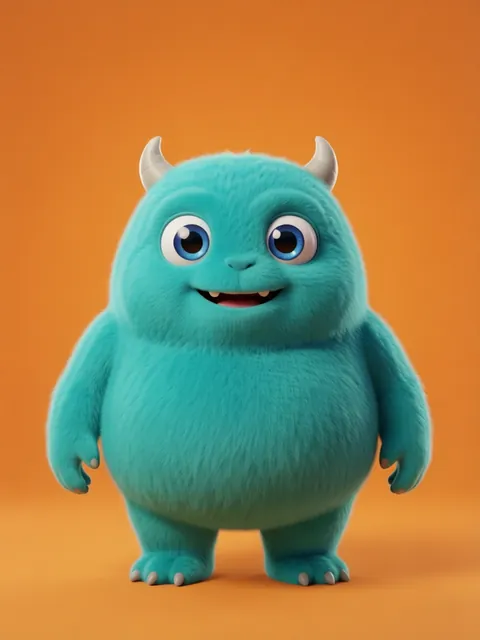
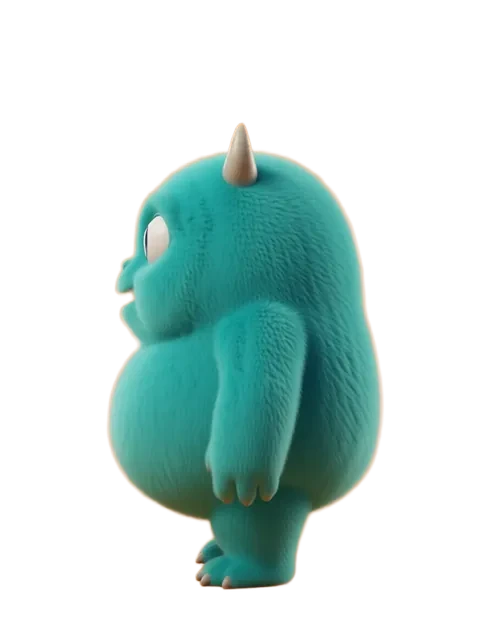
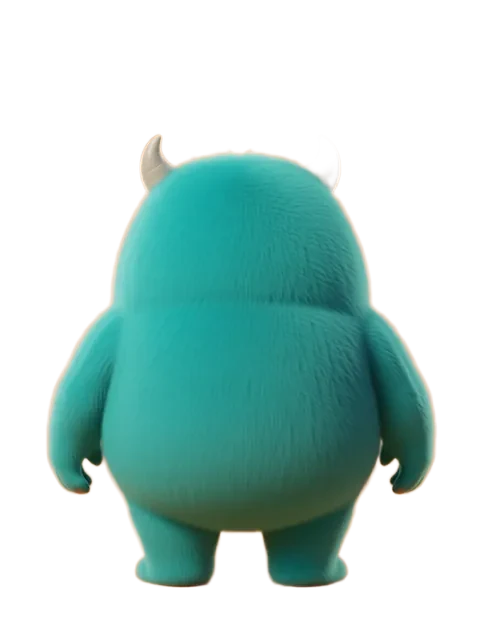

- 01
Design character with clay-friendly rounded forms
Clay cannot hold sharp edges — your character design must embrace this physical constraint. Use bulbous, rounded forms throughout: sphere heads, sausage-shaped limbs, thumb-shaped torso. No sword blades, no angular jawlines, no pointy ears. Every edge must have at least a 15px radius equivalent. Imagine building the character with actual plasticine on your desk: if you couldn’t mold it with your thumbs, redesign it.
- 02
Generate 8-angle set in plasticine clay style with fingerprint texture
Prompt for "plasticine claymation character, Aardman-style, Wallace & Gromit aesthetic, visible thumbprint texture on clay surface, glossy sheen on modeling material, slightly uneven hand-molded edges, photographed on a miniature animation stage." Generate all eight standard angles. The key quality check: every angle must show the same thumbprint scale (fingerprints shouldn’t suddenly become microscopic from the side view) and the same sheen intensity.
- 03
Verify clay surface consistency across angles
This is the most common failure mode: the front view looks perfectly plasticine, but the back view renders too smooth (digital cleanup artifact). Audit every angle for clay texture density (fingerprints per square inch of visible surface), sheen highlight consistency (gloss level should match within 10%), and edge irregularity (no perfectly straight lines anywhere). Flag and regenerate any angle that looks digitally polished.
- 04
Add subtle wire joint lines at articulation points
Stop-motion puppets have internal wire armatures, and visible joint lines at the shoulders, elbows, wrists, hips, knees, and ankles add authenticity. Prompt for "subtle wire-reinforced joint lines visible at articulation points, thin indentations where clay sections meet over the metal armature." These lines should be faint — if they read as drawn-on lines, they’re too strong. They should look like natural clay seams.
- 05
Export for stop-motion model sheet with color-matched plasticine notes
Export every angle at 2048x2048px against a dark miniature-stage background (adds professional context). Create a reference sheet layout with all eight angles plus a color swatch card annotated with equivalent plasticine brand colors (Van Aken, Newplast, or Jovi brand references). This lets a stop-motion artist purchase the exact clay colors to build a physical puppet matching your generated reference.
- Study real plasticine model sheets from Aardman productions before prompting — the camera angle on physical puppets is slightly low (table-height) and adds realism.
- Clay sheen should be specular, not metallic — a soft white highlight spot, not a chrome reflection.
- If fingerprints look like a Photoshop texture overlay, regenerate with "naturally occurring thumbprint impressions in modeling clay" instead.
- Keep the character design simple for your first attempt — a four-fingered clay creature reads more authentic than a realistically proportioned human.
- The dark miniature-stage background with soft key light sells the stop-motion illusion better than a white studio background.
- Wire joint lines should be most visible on inner elbows and backs of knees — these are natural clay stress points.
- Regenerate any angle where the character’s feet look like they’re floating — plasticine puppets always have visible foot contact with the stage surface.
- Add a "clay smudge" area on the stage surface near the feet for extra authenticity — real stop-motion puppets leave tiny clay residue marks.
Frequently asked questions
Can I use plasticine clay style characters in a commercial game?
How do I make the clay texture consistent when I regenerate a bad angle?
What resolution do I need for a stop-motion model sheet print?
Can I generate plasticine clay characters on the free tier?
Ready to create consistent character views?
Upload a reference image and generate multi-angle views that stay true to your character.
Start generating