
Generate Multi-Angle Views in Light Painting Long Exposure Style
Light painting character art captures the ghostly beauty of a figure traced in luminous trails against absolute darkness — like a long-exposure photograph of LED wands sketching a body in midair. The character becomes defined not by surface detail but by the path of light: flowing contour lines, sweeping motion trails, and glowing nodes where light sources linger at key anatomical landmarks. This aesthetic translates beautifully to dance and performance art visuals, music festival LED wall content, experimental photography projects, and large-format projection mapping. The challenge is coherence: light trails must flow continuously across the 3D form from every angle, and the density of light strokes must match so no angle reads as under-illuminated or over-traced. Answer: Use our multi-angle generator with light-painting prompts — describe characters as light-trail paths mapped over a 3D form, enforce trail continuity and color temperature consistency, and export at projection-ready resolutions on pure black backgrounds.
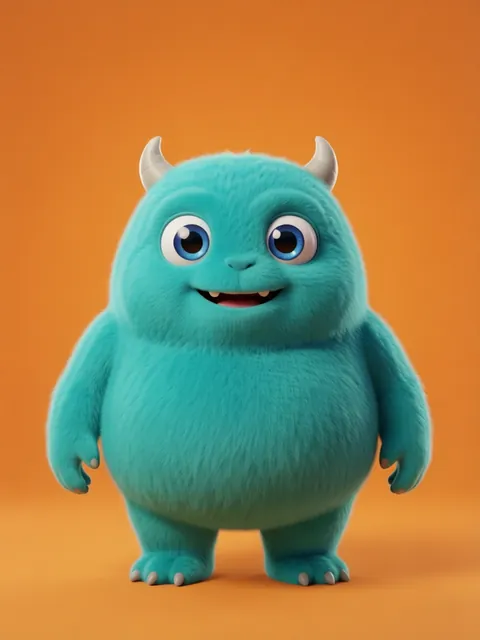
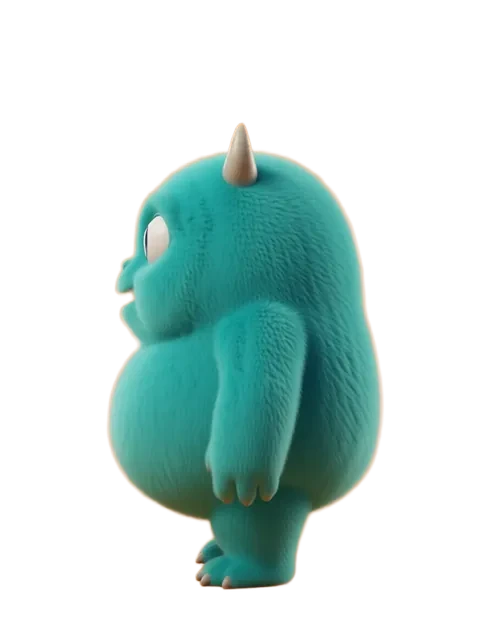
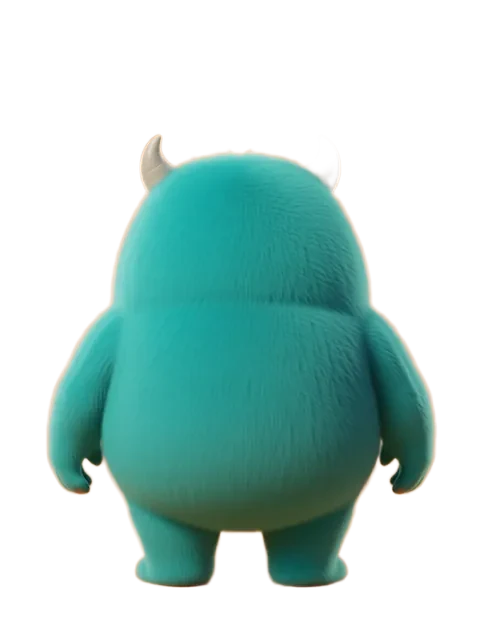
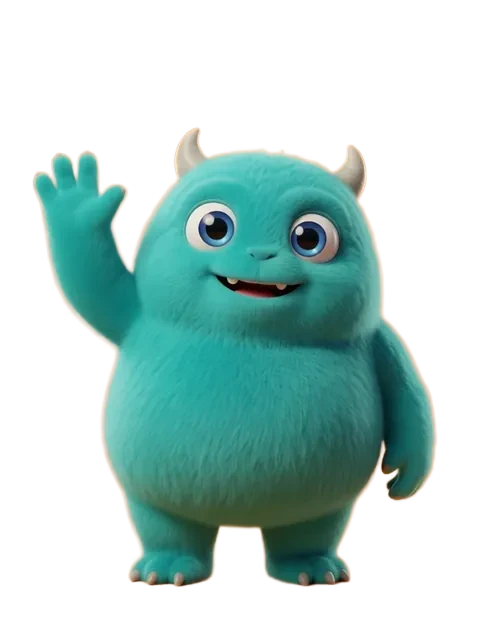
- 01
Describe character as light-trail paths mapped over a 3D form
Instead of describing the character as a solid rendered figure, describe it as a set of light-trail paths that would trace the silhouette, facial features, and key costume details. Specify: "light wand tracing the contour of the jaw, the arc of the shoulders, the sweep of the cape, the line of the spine, with brighter nodes at the eyes, fingertips, and heart center where the wand lingers." Use 3-5 continuous trail lines that flow around the form — one contour line, one skeleton/topology line, one costume accent line, and one ambient fill that weaves between them. Each trail should have a distinct color temperature (warm, cool, neutral) to create depth separation. The character should be readable purely from the light-line drawing — if you removed the prompt and showed someone the result, they should recognize the character type and pose from trail geometry alone.
- 02
Generate 8-angle set in light painting style with luminous trail continuity
Generate all 8 standard angles using prompts that specify: long-exposure light painting photography style, dark studio, LED wand light trails tracing character form, 30-second exposure simulation, light trail motion blur, specular light nodes at anatomical landmarks, no ambient light, deep black background (#000000). Trail continuity is the critical constraint: a light trail that starts at the left shoulder at 0deg must logically reappear at the left shoulder at 45deg, wrapping predictably around the form rather than jumping to random positions. Specify "consistent light trail topology mapped to 3D character surface across all viewing angles" in your batch prompt. Use a common light-trail palette across all angles: warm amber for contour, cool cyan for skeleton lines, magenta for costume accents.
- 03
Verify light trail density and color temperature consistency across angles
Audit the full 8-angle set for two consistency dimensions. First, trail density: each angle should have approximately the same number of visible light strokes, same trail thickness (2-4px width), and same glow bloom radius. An angle where trails are sparse or bloom is weak will read as a "dead" angle when viewed in sequence. Second, color temperature consistency: warm trails should stay warm (2700K-3200K range), cool trails should stay cool (5600K-6500K), and the ratio of warm-to-cool trail area should be consistent angle to angle. If an angle shows color temperature drift (warm trails shifting to neutral, or cool trails going purple), regenerate with tighter color temperature constraints in the prompt.
- 04
Keep backgrounds deep black for maximum light contrast
Enforce absolute black backgrounds (#000000 or 0,0,0 RGB) across all 8 angles. Light painting reads through contrast ratio — every photon of trail luminance pops against void. Even a slight background lift to dark gray (#111111 or above) cuts perceived trail brightness by 30-40%. Specify "completely black background, zero ambient light, no vignette, no background texture, no floor reflection, light trails floating in pure void" in every prompt. Before final export, open each angle in an image editor and sample the background — if any pixel reads above RGB(5,5,5), apply a levels adjustment to crush the bottom 2% to true black. This is especially important for projection mapping and LED wall display where lifted blacks look muddy.
- 05
Export for projection mapping and large-format LED wall display
Export all 8 angles as individual PNGs at 4K resolution (3840x2160px minimum) or native LED wall resolution if known. For projection mapping, export each angle as a separate layer in a PSD or as an image sequence numbered 01-08 for easy import into Resolume, MadMapper, or TouchDesigner. Light painting assets are highly sensitive to compression artifacts — export as PNG-24 (lossless), never JPEG. If creating an animated sequence cycling through angles, render at 8 seconds total (1 second per angle) with 0.5s crossfade dissolves between angles to simulate the light trails morphing. Package includes: 8 individual angle PNGs at 4K, an 8-second ProRes 4444 angle-morph video at 24fps, and a Resolume-ready DXV3 clip for live VJ performance.
- Light trails read best with 3 distinct color temperatures (warm/cool/neutral) creating depth layers — a single-color light painting looks flat
- Free tier users: generate angles individually, composite the animated sequence in DaVinci Resolve (free) using smooth crossfade transitions
- For LED walls, export at the wall native resolution, not a scaled version — LED processors upscale differently than monitors and can introduce moire
- The light trail thickness (2-4px) is calibrated for viewing at 10-50ft; for close-up display, increase trail width to 6-8px
- Black background is not optional for light painting — even a 1% gray background cuts perceived brightness by 25% on LED panels
- For dance performance integration, sync angle transitions to musical phrases — 8 angles at 8 seconds total maps cleanly to a 32-bar phrase at 120bpm
- Test your exports on the actual display hardware before the event — LED wall gamma curves and projection contrast ratios vary wildly between venues
- Tag each angle file with its viewing angle (00, 045, 090, etc.) in the filename so your VJ or projection designer knows the sequence order instantly
Frequently asked questions
Can I generate light painting characters on the free tier?
What resolution do I need for LED wall display at a music festival?
How do I ensure light trail consistency when generating angles separately?
Is the light painting style suitable for print or only for screen display?
Ready to create consistent character views?
Upload a reference image and generate multi-angle views that stay true to your character.
Start generating