
Generate Multi-Angle Views in Art Deco Poster Style
Art Deco poster character art brings the roaring opulence of the 1920s into your multi-angle workflow. With its geometric symmetry, stepped skyscraper silhouettes, sunburst motifs, and that unmistakable gold-and-black palette, this style transforms any character into a luxury brand icon. Think Great Gatsby elegance meets Bauhaus precision — perfect for event poster character art, luxury brand mascots, theatre production posters, or speakeasy and cocktail bar branding. Art Deco demands structure: every chevron, fan motif, and stepped arch must read consistently across angles, or the illusion shatters. Answer: Use our multi-angle generator with deco-poster style prompts, exacting geometric symmetry, metallic gold accents, and a tightly controlled 4-color Deco palette to produce 8 character angles at poster-ready resolution with professional print specifications built in.
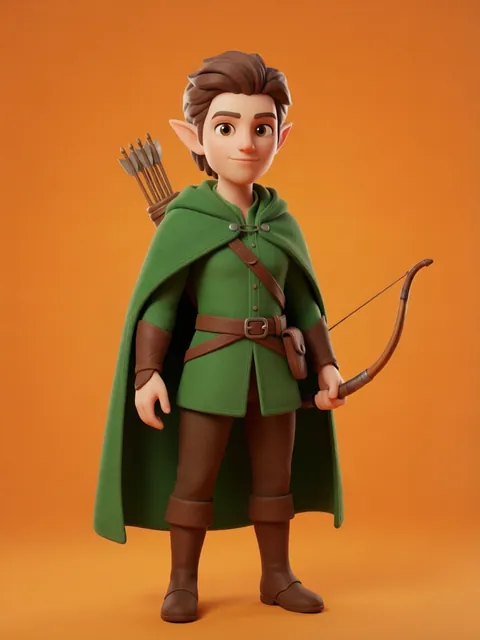
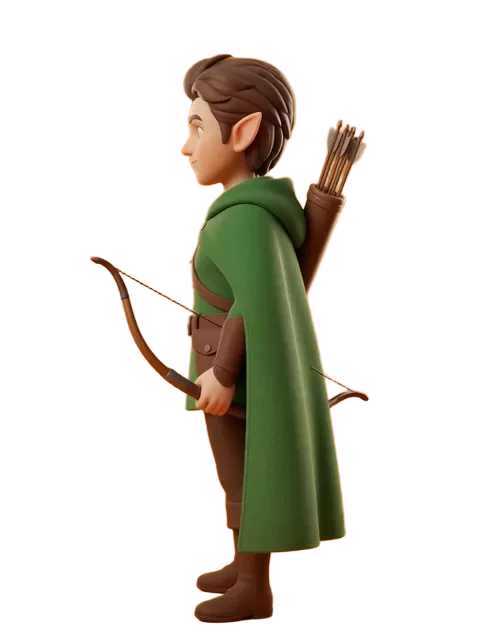
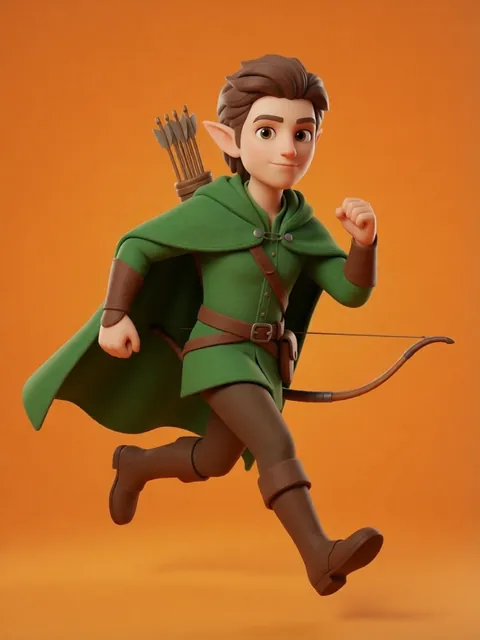

- 01
Design character with Deco-appropriate symmetry and geometric stylization
Start by establishing your character in strict front-facing symmetry — Art Deco is built on bilateral balance. Define geometric facial planes (sharp cheekbones, angular jawlines), stylized hair as stepped or fan forms, and costume elements as layered geometric shapes. Avoid organic curves and soft transitions; Deco rewards hard edges, elongated proportions, and architectural construction. Your character silhouette should read like a skyscraper: vertically stacked, stepped, and statuesque. Sketch the costume as a series of geometric panels with chevron, fan, and ziggurat ornamentation. This is your master reference that all 8 angles will derive from — getting the Deco geometry right here prevents asymmetry drift later.
- 02
Generate 8-angle set in Art Deco poster style with gold metallic accents
Generate all 8 standard angles (0deg through 315deg in 45deg increments) using prompts that specify: Art Deco poster style, geometric symmetry, gold metallic leaf accents, stepped skyscraper forms, sunburst background radiating from behind the character, and 1920s lithograph print aesthetic. Each angle must maintain the same gold placement pattern — if gold trim exists on the left lapel at 0deg, it must appear correctly repositioned (not mirrored or missing) at 90deg and 180deg. Prompt for a metallic ink simulation that suggests reflective gold, not flat yellow. The sunburst background should remain consistent: same ray count, same origin point behind the character, same opacity across all angles.
- 03
Verify Deco geometric ornamentation consistency across angles
Audit every angle for geometric ornamentation consistency. Check that chevrons (V-shaped repeating patterns) maintain the same size, spacing, and orientation relative to the character surface they adorn. Verify fan motifs radiate from the same origin points regardless of viewing angle. Confirm stepped arch forms (layered concentric arches) are not distorted by rotation — they should compress predictably in foreshortened angles. Any Deco-specific geometric vocabulary (sunburst collars, ziggurat crowns, geometric fascia bands) must persist across all 8 views. If an angle shows ornamentation drift — chevrons becoming wavy lines, fans collapsing into blobs — regenerate that specific angle with tighter geometric constraint prompts.
- 04
Limit palette to black, gold, cream, and one accent jewel tone
Enforce a strict 4-color Deco palette across all angles: deep black (background and deepest shadows), metallic gold (primary ornamentation and highlights), warm cream or ivory (skin tones and light costume areas), and one accent jewel tone — choose either emerald green or sapphire blue for dramatic Deco contrast. No gradients, no blended transitions between colors — Deco is a flat-color print aesthetic. The gold must be consistent in hue and luminosity across all angles; a common AI issue is gold shifting toward bronze or yellow between generations. Use a reference gold color swatch in your prompts: hex #D4AF37 or C0 M20 Y60 K0 in print terms.
- 05
Export at poster resolution with metallic gold print specifications
Export all 8 angles individually and as a contact sheet at 18x24 inches at 300dpi (5400x7200px). For print production, add a metallic gold spot-color specification layer — provide your printer with a fifth channel showing gold areas as 100% solid for foil stamping or metallic spot ink. Include a 0.125in bleed on all sides with the sunburst background extending into the bleed zone. Final deliverable package: 8 individual angle PNGs at full resolution, 1 contact-sheet layout showing all 8 angles with angle labels, and a print-spec PDF with bleed/crop marks and spot color separations. Specify Coated GRACoL 2013 color profile for litho or giclee reproduction.
- Use hex #D4AF37 as your gold reference — paste it into prompts so the AI knows exactly which metallic tone you want
- Deco typography matters: if adding titles to the poster, use Broadway, Bifur, or ITC Anna fonts for authentic 1920s character
- Symmetry is non-negotiable for the front (0deg) angle — if it is not bilaterally symmetric, the Deco aesthetic collapses
- Free users: generate angles one at a time on the free tier and manually composite the contact sheet in Canva or Photopea
- Print tip: metallic gold spot color adds about 20-30% to print cost but transforms the poster from flat to premium
- The sunburst ray count affects visual energy: 12 rays reads calm and elegant, 24+ rays reads dynamic and dramatic
- Test your gold placement at 180deg (rear view) — this is where AI most often loses metallic consistency
- For theatre posters, leave 20% of the lower poster area as negative space for show title, dates, and venue copy
Frequently asked questions
How many angles can I generate on the free tier?
Can I use the generated Art Deco characters for commercial posters?
How do I get consistent gold metallic color across all 8 angles?
What print file format should I request for professional poster printing?
Ready to create consistent character views?
Upload a reference image and generate multi-angle views that stay true to your character.
Start generating