
How to Create Character Art for Webcomic Banner Ads
A webcomic banner ad has the hardest job in display advertising: the character must be recognizable at 728x90 (leaderboard), 300x250 (rectangle), 160x600 (skyscraper), and 320x50 (mobile banner) — four radically different aspect ratios where the same face needs to read as the same person. Answer: Generate a comic-style character reference first, pick the most recognizable head-and-shoulders angle (front-3q4 with eye contact), compose at 300x250px as the master since it’s the most common placement, then scale down to leaderboard and mobile sizes verifying the character still reads. WEBTOON Canvas and Tapas promotion tools, legacy comic ad networks like ComicAd, and display networks all use IAB standard banner sizes — but your character is the variable that determines whether someone browsing another comic clicks through to yours. A character with a strong silhouette and direct eye contact outperforms a full-body group shot at banner scale every time.
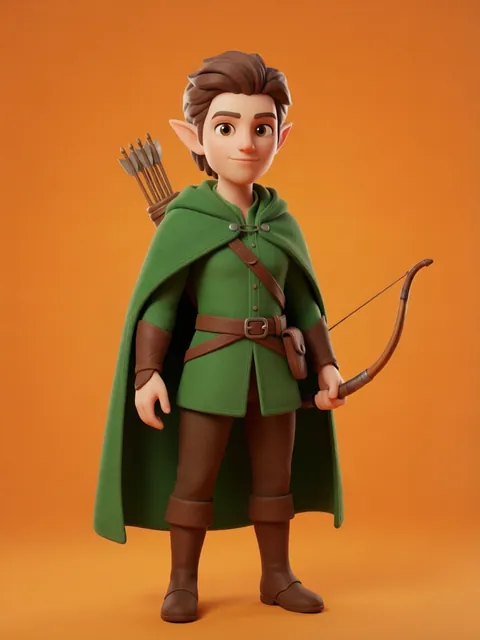
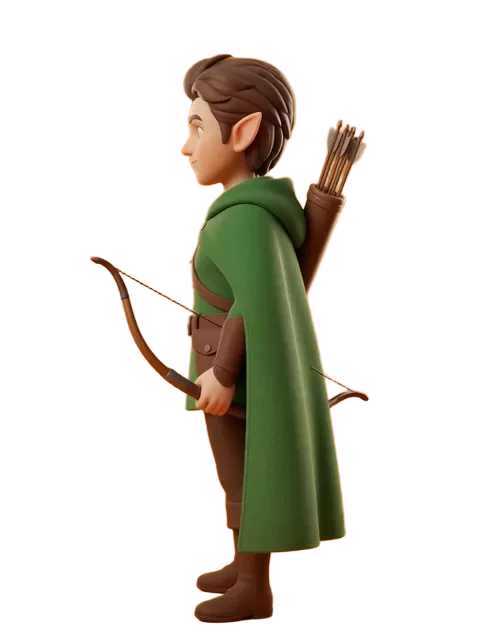
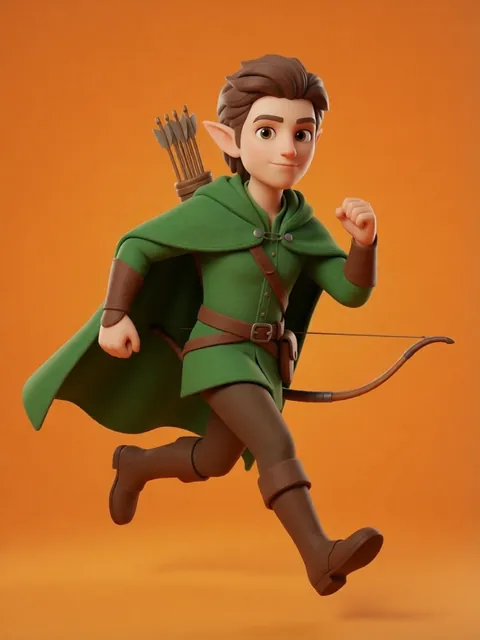
- 01
Generate a comic-style character reference optimized for banner visibility
Create your webcomic character in a comic-book style with bold ink lines (3–4px on key contours), flat mid-tones with cel shading, and a simplified color palette of 5–8 colors. Banner ads are viewed at small sizes and low attention — complex rendering, soft gradients, and painterly textures disappear at 728x90. Focus on what reads at banner scale: strong silhouette, distinct facial features (large eyes, clear hair shape, signature accessory), and high contrast between the character and background. Generate the front-3q4 angle first — this is the most recognizable and engaging angle for ad creative because it combines face visibility with dimensional depth.
- 02
Compose the master banner at 300x250px (Medium Rectangle)
The 300x250px Medium Rectangle is the workhorse of display advertising — it appears in sidebars, between comic pages, and at the bottom of articles. Compose your character here first as the master creative. Frame the character from the chest or shoulders up so the face occupies roughly 40–50% of the canvas. Add the webcomic title and a short tagline (4–7 words max) in a bold, readable font — no script or display fonts at banner size. The character should make eye contact with the viewer: direct gaze increases click-through rates on display ads by a measurable margin. Leave a 10px safe zone on all edges for ad network padding.
- 03
Scale the character to 728x90px leaderboard format
The leaderboard (728x90px) is the widest and shortest format. The character cannot fill the full height at 90px — instead, position the character’s head and shoulders on the left or center-left third of the banner (roughly 240px wide by 80px tall zone), and use the remaining horizontal space for the webcomic title, tagline, and a "Read Now" call-to-action arrow. The character’s face should be at least 50px tall to remain recognizable. Test: squint at the banner from 3 feet away. If you cannot identify the character as the same person from the 300x250 master, the face is too small.
- 04
Adapt the character to 160x600px skyscraper and 320x50px mobile banner
Skyscraper (160x600px): The narrow vertical format works well for a full-body character pose or a head-to-waist crop. Stack the character at the top 60% of the banner, title in the middle, CTA at the bottom. The character’s face should occupy at least 80px in height. Mobile banner (320x50px): This is the hardest format — only 50px tall. Crop to the character’s face only (no shoulders) with the webcomic title beside it. At 320x50, you have room for the character’s face plus 4–6 words of text. Do not try to fit the full character — a readable face at 50px height beats an unrecognizable full-body figure.
- 05
Export all banner sizes with consistent coloring and branding
Export each banner size as PNG-24 (for sharp text and character edges) or JPEG at 90% quality if file size is a concern for ad network requirements. Maintain identical color values (hex codes) across all sizes — the character’s skin tone, hair color, and outfit colors must match exactly. Use the same typeface, title treatment, and brand accent color across all formats. Final validation: open all four banner sizes side by side. They should read as one unified ad campaign starring the same character, not four disconnected graphics. If a viewer sees the leaderboard on desktop and later the mobile banner on their phone, they should instantly recognize it as the same webcomic.
- Direct eye contact from the character increases banner click-through rates — in a medium where most ads are ignored, a character looking at the viewer breaks the scroll pattern.
- Use a bold, sans-serif font for webcomic titles on banners — comic-style display fonts or speech-bubble lettering become illegible at banner sizes below 300px wide.
- The 300x250px rectangle is the most important format to get right — it appears in more placements across more ad networks than any other IAB standard size.
- Do not use the same full-body character shot at every banner size — crop progressively tighter as the format shrinks, keeping the face recognizable as the constant.
- Test banners on a real phone screen, not just your desktop monitor — the 320x50 mobile banner looks different on a 390px-wide phone display than in a 320px viewport simulator.
- Keep the background simple: a solid color, subtle gradient, or comic-panel border. Busy backgrounds compete with the character for attention at small sizes.
- If advertising on WEBTOON Canvas, match your banner’s art style to the thumbnail style of your actual comic — readers click ads that look like comics they already read.
- Rotate banner creative every 2–4 weeks with the same character in different poses — ad fatigue is real, and a fresh pose from the same character outperforms a stale banner with a higher budget.
Frequently asked questions
What are the IAB standard banner sizes for webcomic advertising?
Can the free tier generate character art for webcomic banner ads?
What character art style works best at small banner sizes like 320x50px?
Should I use animation in webcomic banner ads?
Ready to create consistent character views?
Upload a reference image and generate multi-angle views that stay true to your character.
Start generating