
Consistent AI Characters for Children's Books
Lock your protagonist once. Ship the same character across 32 pages — every spread, every expression, every scene. Then publish on Amazon KDP.
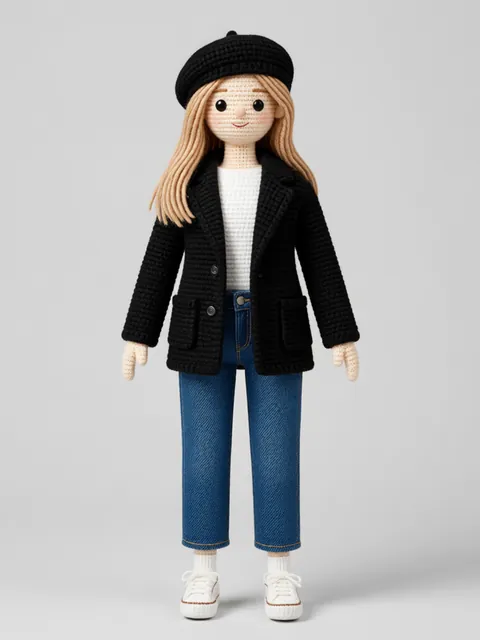
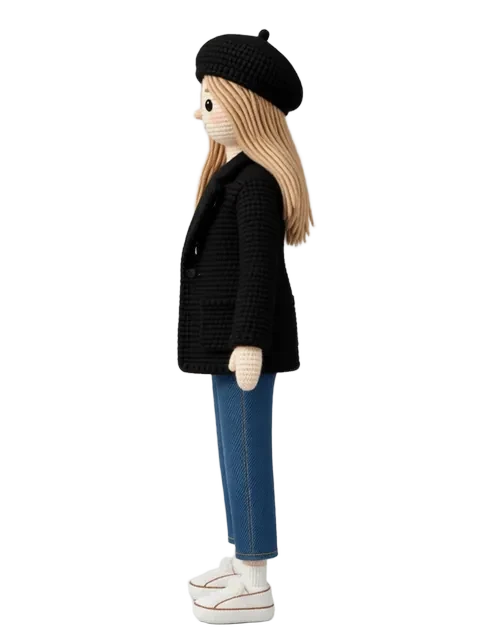
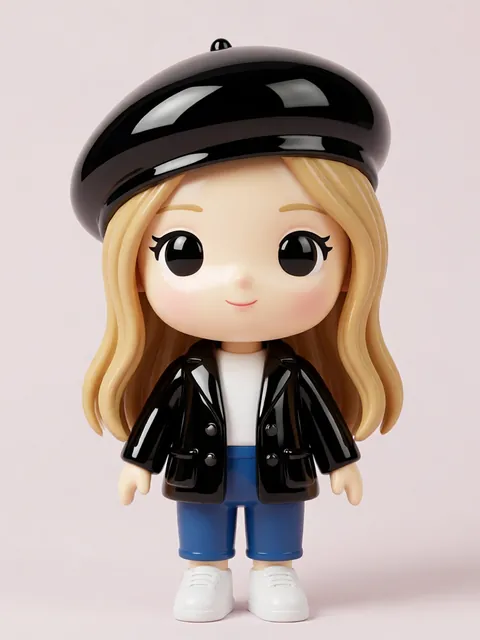
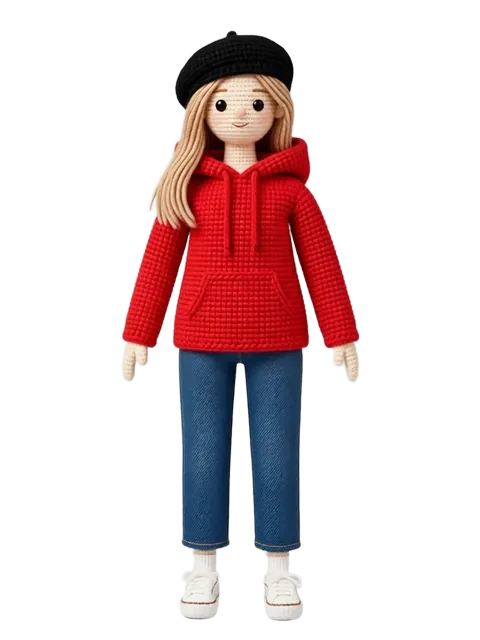
AI character consistency for children's books means generating a protagonist — the mouse, the dragon, the curious kid — that reads as the same character on every page of a 32-page picture book, preserving face shape, eye color, body proportions, outfit details, and art style across all angles, expressions, and scenes without the drift that breaks immersion for young readers.
A 3-year-old doesn't analyze illustration quality. They recognize their friend on the page — or they don't. When your protagonist's eyes shift from brown to hazel between spread 4 and spread 7, the child might not articulate why they lost interest. But the spell is broken. Character consistency in picture books isn't an aesthetic choice — it's the emotional contract with the reader.
Children's book illustrators have known this for generations. That's why traditional publishing houses invest in character bibles and model sheets before any final art is produced. AI tools can now generate those reference sets in minutes instead of days. But most AI image generators still can't solve the core problem: keeping the character locked across multiple angles, expressions, and scenes.
Why AI characters fall apart by spread 5
A typical 32-page picture book has 14–16 illustrated spreads. Your protagonist appears on most of them. With traditional AI image tools, each generation is an independent roll of the dice — the model re-interprets your prompt and produces a character that's close but not identical. By spread 5, the face shape has drifted. By spread 10, the outfit gained buttons that weren't there before. By spread 14, the eye color shifted a shade and the silhouette reads as a different character.
Midjourney's --cref parameter weights a reference image but loses fidelity at extreme angles. Stable Diffusion LoRAs need 20–40 training images and still drift on uncommon poses. Both approaches make you fight the consistency battle spread by spread, prompt by prompt, seed by seed — and you lose the battle before the book reaches its climax.
"The fix isn't a longer prompt or a better negative prompt. It's generating the full multi-angle reference set in one pass — all 8 angles locked to the same identity — then referencing that set for every spread you illustrate. Same workflow studio artists have used for 80 years. AI just made it 50× faster."
Character consistency by construction, not by prompt engineering. Upload one character image. Generate all 8 angles in a single pass. Pin the reference set next to your canvas. Every spread references the same canonical design — zero drift by definition.
What a children's book illustration costs — AI vs traditional
Self-publishing authors on Amazon KDP face a hard economics problem: illustration is the single biggest cost, and it determines whether the book earns out.
- Professional illustrators charge $150–$500 per spread
- 14–16 spreads = $2,100–$8,000 for interiors alone
- Cover art adds $500–$2,000
- Character design and model sheets add $1,000–$3,000
- Revisions and changes add 20–30% to total
- At $3.99 cover price and 70% royalty: need 1,100–5,400 sales to break even
- Generate full character reference set in minutes
- 8 angles, expression sheet, pose library — one session
- Monthly credit allowance + member pricing — full book reference in 2–3 days
- Refine final art in Procreate, Affinity, or Canva
- Revisions cost $0 — re-generate with adjusted settings
- At $3.99 cover price and 70% royalty: break even at 18 sales
The economics flip from "can I afford to illustrate this book?" to "how many books can I publish this year?" — the same shift that drove the indie author revolution in fiction now arriving for picture books.
See the difference
Per-spread generation
Each spread generated independently. Face shape drifts. Eye color shifts. Outfit details change. By page 10, a child reader notices something is wrong — even if they can't name it.
EZ Character locked
One upload. Eight consistent angles in one pass. Same face, same eyes, same outfit across all 32 pages. Every spread references the same canonical design. The emotional contract with the reader holds.
The children's book illustration workflow
- 1
Design & lock your protagonist
Start with one character image — AI concept art, a rough sketch, or a reference photo. Upload to EZ Character's Turnaround Sheet. Get 8 consistent angles in one pass. This is your canonical reference set for the entire book.
Character lock - 2
Generate expression sheet & poses
From the same locked design, generate 6–8 expression variations (happy, sad, surprised, worried, determined, sleepy, laughing, curious) and 3–5 action poses for key scenes. Every variant shares the locked identity.
Expression sheet - 3
Illustrate spreads, refine, publish
Pin the reference set in Procreate, Affinity Publisher, or Clip Studio Paint. Compose each spread referencing the canonical character. Refine the art. Export to KDP trim size at 300 DPI. Upload and publish.
Spread illustration
Try it yourself
Upload your character concept. Get 8 consistent angles in seconds. Lock the reference set for your children's book.
PNG, JPG or WebP · large images optimized automatically · Free to try
How children's book creators use EZ Character
Protagonist reference sheet before spread 1
Lock your hero character before any page layouts begin. Generate the full 8-angle reference set in your book's art style — watercolor, gouache, digital painterly, or flat-color cartoon. Print it. Pin it next to your manuscript. Every spread from page 1 to page 32 references the same source of truth.
Expression sheet for emotional beats
A 32-page picture book has an emotional arc — introduction, rising tension, climax, resolution. Your character needs to convey that range. Generate 6–8 expression variants from the same locked design and pull the right expression for each scene without re-designing the character.
Full cast consistency — protagonist, sidekick, antagonist, pet
Most picture books have 2–4 recurring characters. Lock each one with their own multi-angle reference set in the same style. The entire cast stays visually coherent from the title page to the end papers. For series, reuse the same reference sets across Book 2, Book 3, and beyond.
From reference set to published on Amazon KDP
Export character art at print resolution (2048px+ for 8.5×8.5" at 300 DPI). Composite into KDP templates in Affinity Publisher, InDesign, or Canva. Generate your cover with the same locked character. Upload to KDP. The complete pipeline from character lock to published book — in weeks, not months.
Children's book art styles you can lock
Pick the style that matches your manuscript's tone. Lock it before generating the reference set. Style drift reads as a different book to young readers.
Watercolor
Soft edges, paper texture, color bleeds. Gentle and classic. Best for bedtime stories, nature themes, emotional/personal narratives. Think: The Snowy Day, Owl Moon.
Gouache
Opaque, painterly, mid-century modern. Rich pigment with visible brushwork. Best for fairy tales, folk stories, animal protagonists. Think: classic Little Golden Books.
Digital painterly
Contemporary, textured, Pixar-adjacent. Full color range with lighting depth. Best for fantasy, adventure, stories with dramatic lighting changes. Think: modern animated feature concept art.
Flat-color cartoon
Bold, graphic, high contrast. Clean silhouettes and saturated palette. Best for silly/humorous stories, early readers, concept books. Think: Don't Let the Pigeon Drive the Bus.
Ink and wash
Expressive line art with tonal washes. Loose but controlled. Best for chapter books, slightly-older readers, stories with a hand-drawn feel. Think: Ivy + Bean, early chapter book interiors.
Cut-paper / collage
Textured, tactile, hands-on. Layered shapes with visible paper edges. Best for concept books, nature themes, interactive reads. Think: Eric Carle, Lois Ehlert.
Frequently asked questions
Can I sell children's books illustrated with AI-generated characters?
What art styles work best for children's picture books?
How many reference angles do I need for a 32-page picture book?
How does this compare to hiring a human illustrator?
Will Amazon KDP accept my AI-illustrated children's book?
How do I keep multiple characters consistent across a series?
What format and resolution should I generate for print?
Do you have templates for standard children's book layouts?
Lock your protagonist. Publish your book.
Upload one character image. Get 8 consistent angles. Pin the reference next to your canvas. Illustrate your children's book in weeks, not months.
Try Turnaround Sheet freeFree tier: 40 credits every month. No credit card required. Paid plans include full commercial rights for Amazon KDP publishing.